| Soft skills training develops the human skills, communication, teamwork, adaptability, feedback, that determine how well people work with others. It works best not as lectures but through practice: teach the concept briefly, then use realistic scenarios and role-plays, give specific feedback, and reinforce the skill on the job through manager coaching so it becomes a habit, not a one-off session. |
Why Soft Skills Matter More Than Ever
Organizations pour effort into technical training and often neglect the skills that actually determine whether people succeed together: how they communicate, handle conflict, give and take feedback, collaborate and adapt. These 'soft' skills are anything but soft in their impact. A technically brilliant team that cannot communicate or collaborate underperforms a competent one that can.
As more routine technical work is automated and augmented, the distinctly human skills become more valuable, not less. Communication, empathy, adaptability and teamwork are increasingly what separates strong performers and strong teams. That makes soft skills training one of the higher-leverage investments an organization can make, and one of the most commonly underdone.
| 'Soft' skills have hard consequences. Poor communication, weak feedback and bad collaboration cause missed deadlines, conflict and turnover, real costs that no amount of technical skill compensates for. |
What Counts as a Soft Skill
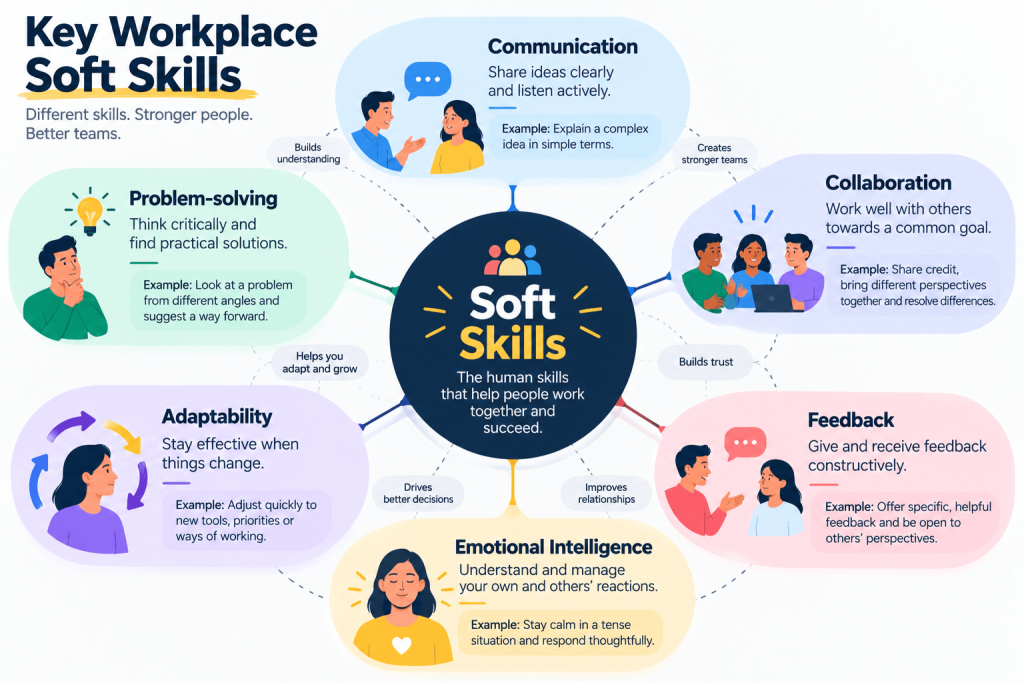
Soft skills are the interpersonal and self-management abilities that shape how effectively someone works, distinct from the technical, job-specific 'hard' skills. Naming the ones that matter to you keeps training targeted rather than vague.
- Communication: explaining clearly, listening, writing well, adjusting to the audience.
- Teamwork and collaboration: working with others, sharing credit, handling disagreement.
- Feedback: giving it constructively and receiving it without defensiveness.
- Adaptability: staying effective when priorities, tools or plans change.
- Emotional intelligence: reading situations and managing your own and others' reactions.
- Problem-solving and critical thinking: working through ambiguity to a good decision.
Why Lectures Do Not Work for Soft Skills
The biggest mistake in soft skills training is teaching them like facts: a slideshow on 'effective communication,' a quiz, done. Soft skills are not knowledge to memorize; they are behaviours to practise. You cannot become a good listener or a skilled feedback-giver by hearing about it, any more than you can learn to swim from a lecture. Knowing the theory and being able to do it under real pressure are entirely different.
That is why soft skills training must be built around practice. A short explanation of what good looks like is useful as a starting model, but the learning happens when people try the skill in realistic situations, a difficult conversation role-play, a team scenario, a feedback exercise, and get specific coaching on how they did. Practice plus feedback is the only reliable way soft skills improve.
Build Soft Skills Training Around Practice
A soft skills program that changes behaviour follows a consistent shape. Start by choosing the specific skills your teams actually need, based on where you see problems, rather than training a generic list. Teach each concept briefly so people have a model to aim at. Then spend most of the time on application: role-plays, realistic scenarios, group discussion and exercises where people actually practise the skill.
Follow the practice with specific, kind feedback, because that is where improvement lives, and then reinforce it on the job. Soft skills fade fast if the session is the only time they are used, so the strongest programs enlist managers to notice, coach and encourage the skills in real work. A course can start the change; day-to-day reinforcement is what makes it stick.
| Blend the format: use self-paced content to teach the concept and set up scenarios efficiently, and reserve live time for the practice, role-play and feedback that only work in interaction. That respects people's time without losing what makes soft skills training effective. |
How MyPass LMS Supports Soft Skills Training
Soft skills need practice, but the concept-teaching, scenario setup, reinforcement and tracking all have a natural home in an LMS, so live time is spent where it matters. In MyPass LMS you can deliver the short concept lessons and scenario-based content as structured courses, so everyone arrives at the practice sessions with the same grounding, and you are not spending scarce live time on things a video could cover.
Because soft skills fade without reinforcement, spaced refreshers and follow-up modules, delivered and scheduled in the platform, keep the skills alive between and after sessions. Reporting shows completion and where people engage, and flat pricing with unlimited registered users means you can extend soft skills development to everyone, not ration it, since it does not add per-seat cost.
| Start with one soft skill your teams visibly struggle with, feedback and communication are common choices, and build a short program of concept plus heavy practice plus manager reinforcement. One skill done properly teaches you how to run the rest. |
The bottom line
Soft skills, communication, collaboration, feedback, adaptability, determine how well people work together, and their impact is anything but soft. They matter more as routine technical work is automated, yet they are commonly underdeveloped, largely because organizations try to teach them like facts. Soft skills are behaviours, so they are learned through practice and feedback, not lectures.
Teach the concept briefly, practise heavily in realistic scenarios, coach with specific feedback, and reinforce on the job. See how structured content and reinforcement support a practice-led program in MyPass LMS features, read about blended learning, or start a free trial.
Frequently asked questions
What is soft skills training?
Soft skills training develops the interpersonal and self-management abilities, communication, teamwork, feedback, adaptability, emotional intelligence, problem-solving, that shape how effectively someone works with others, as distinct from technical 'hard' skills. Because these are behaviours rather than facts, effective soft skills training is built around practice and feedback (role-plays, realistic scenarios, coaching) rather than lectures, and is reinforced on the job so the skills become habits.
Why is soft skills training important?
Because soft skills largely determine whether people and teams succeed together: poor communication, weak feedback and bad collaboration cause missed deadlines, conflict and turnover, regardless of technical ability. As routine technical work is increasingly automated and augmented, distinctly human skills like communication, empathy and adaptability become more valuable, not less. That makes soft skills one of the higher-leverage and most commonly underdone training investments an organization can make.
What are examples of soft skills?
Common workplace soft skills include communication (explaining clearly, listening, writing well), teamwork and collaboration, giving and receiving feedback, adaptability when priorities or tools change, emotional intelligence (reading situations and managing reactions), and problem-solving or critical thinking. The most useful approach is to identify the specific soft skills your teams actually struggle with, rather than training a generic list, so development is targeted where it will make a difference.
How do you train soft skills effectively?
Not with lectures. Pick the specific skills your teams need, teach each concept briefly so people have a model, then spend most of the time on practice, role-plays, realistic scenarios and exercises, followed by specific, constructive feedback. Reinforce the skills on the job by having managers notice and coach them in real work, since soft skills fade fast without use. A blended approach, self-paced content for the concept, live time for practice, works well.