| A skills taxonomy is a structured framework that organizes the skills an organization needs into categories, with clear definitions and proficiency levels. It creates a shared language so the same skill means the same thing across teams. It is the foundation of a skills-based organization, and most organizations do not yet have one. |
What a Skills Taxonomy Is
A skills taxonomy is a structured framework that classifies and organizes the skills relevant to an organization, from broad categories down to specific skills, with definitions and proficiency levels attached. Think of it as a dictionary for capabilities: it gives everyone, HR, managers and employees, a shared language for what skills exist and what each proficiency level means.
This shared language is the whole point. Without a taxonomy, 'data analysis' in a job posting, 'data analysis' in a performance review and 'data analysis' in a training catalogue may mean three different things, and skills data collected across systems cannot be compared. A taxonomy makes skills data consistent enough to act on.
| A quick test of whether you need one: if two teams use the same skill name to mean different things, or you cannot answer 'who in the company can do X, and how well?', you need a skills taxonomy. |
Taxonomy vs Ontology vs Competency Framework
These terms get used interchangeably and are not the same. Getting the distinction right saves confusion when you start building.
| Term | What it is |
| Skills taxonomy | A structured list of skills, categorised, defined, with proficiency levels |
| Skills ontology | A taxonomy plus the relationships between skills (which skills relate to or build on others) |
| Competency framework | Skills plus behaviours, values and role expectations combined |
For most organizations, the taxonomy is the right starting point. It is the foundational layer; ontologies and competency frameworks build on top of it once the taxonomy exists.
Why It Matters Now
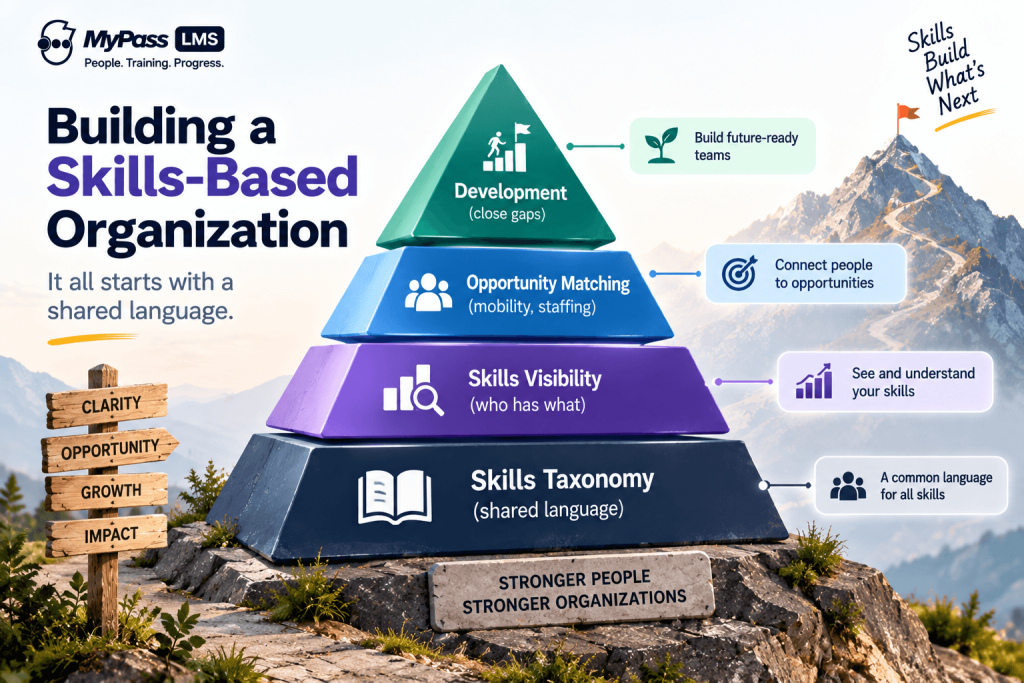
Skills taxonomies have moved from HR nicety to strategic foundation, because a large majority of organizations still lack one, and that absence is the single biggest barrier to becoming skills-based. Everything a skills-based organization does, internal mobility, targeted reskilling, skills-based hiring, depends on this foundation.
- Internal mobility: match people to open roles and projects by skill, not just job title.
- Targeted development: find real skills gaps and aim training precisely at them.
- Skills-based hiring: define roles by the skills they need, widening the candidate pool.
- Workforce planning: see the capabilities you have and the ones your strategy will require.
- Pay transparency: tie pay differences to genuine differences in skill and responsibility.
How to Build One Without Boiling the Ocean
The most common way skills taxonomies fail is trying to map every skill in the organization before anything goes live. The teams that succeed start narrow and expand in response to demand.
- Start with one use case and the roles it touches, not the whole company.
- Inventory skills from job descriptions, subject-matter experts and existing data.
- Group skills from general categories down to specific ones, with clear definitions.
- Add 3-5 proficiency levels per skill so ratings are consistent.
- Prove value on that first use case, then expand to adjacent roles.
- Keep it live: update it as roles and skills change, rather than freezing a document.
| The single most important design choice: a skills taxonomy is a live system, not a spreadsheet. A document cannot tell you who gained a skill last month or whose certification just expired. The value comes from keeping it current and searchable. |
Where MyPass LMS Fits
A skills taxonomy defines what skills matter; the learning platform is where people actually build those skills and where completion becomes evidence of proficiency. The two work together: the taxonomy sets the target, the LMS closes the gap and records the result.
MyPass LMS supports the development and evidence side. Learning paths can be built around the skills a role requires, the AI course builder helps create content for specific skills quickly, and completion and assessment data show who has demonstrated which skills. That turns an abstract taxonomy into a living record of capability tied to real training.
| A taxonomy without a way to develop and verify skills stays theoretical. Pair it with a learning platform so that gaining a skill is trackable: a completed, assessed learning path is far stronger evidence than a self-reported rating. |
The bottom line
A skills taxonomy is the shared language that makes a skills-based approach possible: skills organized into categories, defined, with proficiency levels everyone understands the same way. Most organizations do not have one yet, which is exactly why building one is a competitive move. Start with one use case, keep it live, and expand from there.
The taxonomy sets the target; a learning platform closes the gaps and proves proficiency. See how learning paths and analytics turn skills into evidence in MyPass LMS features, read our training needs analysis guide, or start a free trial.
Frequently asked questions
What is a skills taxonomy?
A skills taxonomy is a structured framework that organizes the skills an organization needs into categories, from broad groups down to specific skills, each with a definition and proficiency levels. It creates a shared language so a skill means the same thing across hiring, development and performance, and makes skills data consistent enough to act on across the organization.
How do you build a skills taxonomy?
Start with one use case, such as internal mobility, and the roles it affects, rather than mapping everything at once. Inventory skills from job descriptions and subject-matter experts, group them from general to specific categories, add 3-5 proficiency levels per skill, prove value on the first use case, then expand. Keep it a live, continuously updated system, not a static document.
What is the difference between a skills taxonomy and a competency framework?
A skills taxonomy is a categorised, defined list of skills with proficiency levels. A competency framework is broader, combining skills with behaviours, values and role expectations, such as 'strategic thinking' or 'customer focus'. The taxonomy is the foundational layer; competency frameworks and skills ontologies build on top of it once the taxonomy exists.
Why do organizations need a skills taxonomy?
Because a skills-based approach depends on it. Internal mobility, targeted reskilling, skills-based hiring and workforce planning all require a consistent way to describe skills. Without a taxonomy, the same skill name means different things across teams and skills data cannot be compared. A large majority of organizations still lack one, making it a barrier to becoming skills-based.