Training Needs Analysis: How to Find What to Train
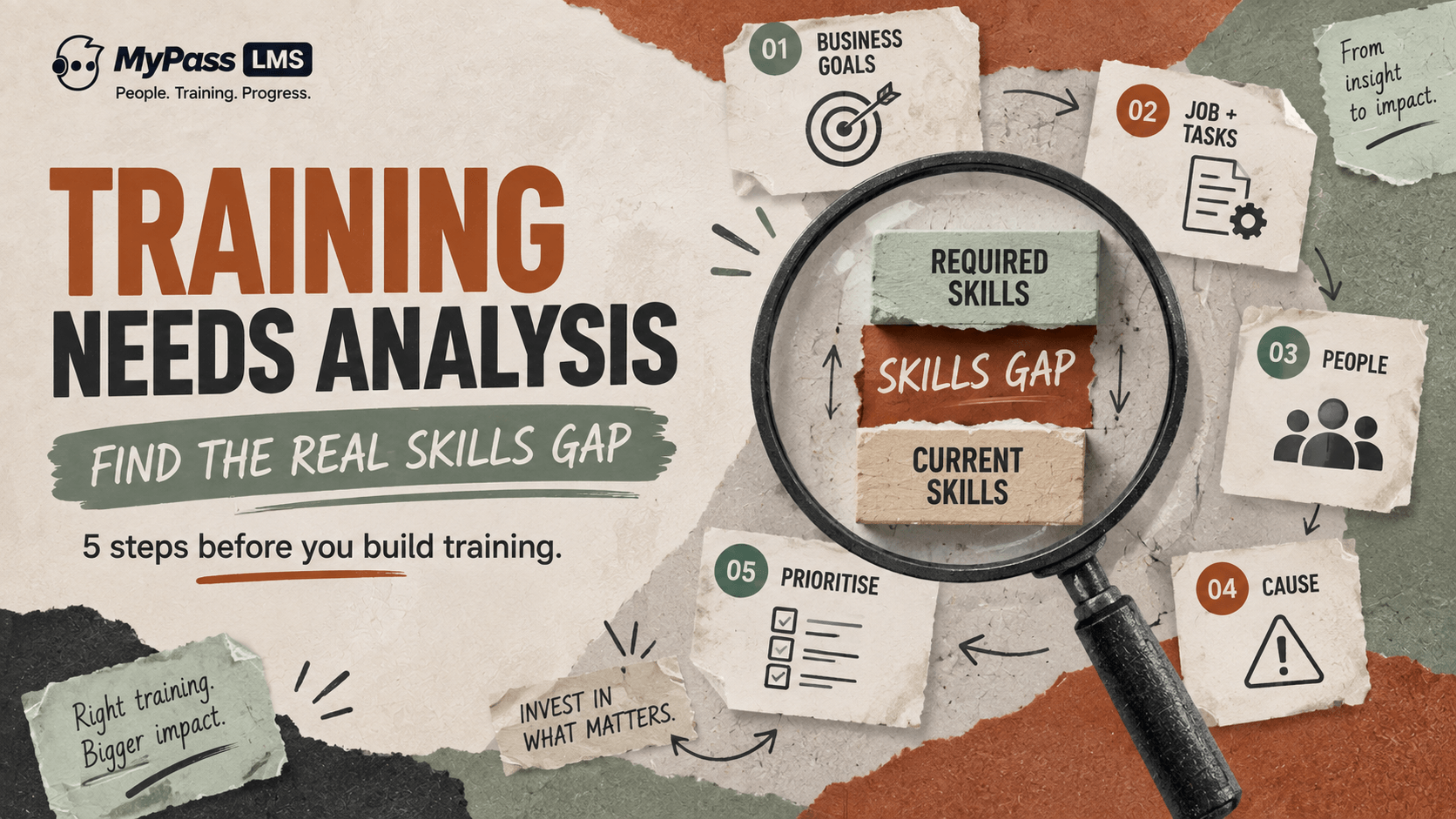
A training needs analysis is a systematic way to find the gap between what employees can do now and what they need to do, then decide whether training can close it. The core process runs in five steps: define business goals, analyse the job, assess the people, check the cause, and prioritise the training that matters.
On this page 7 sections
Short answer
A training needs analysis is a systematic way to find the gap between what employees can do now and what they need to do, then decide whether training can close it. The core process runs in five steps: define business goals, analyse the job, assess the people, check the cause, and prioritise the training that matters.
What a Training Needs Analysis Actually Is
A training needs analysis, or TNA, is the diagnostic step that comes before you build or buy any training. It identifies the gap between employees' current knowledge, skills and abilities and the level the business actually needs, then helps you decide whether training is the right way to close that gap.
The reason it matters is simple: without it, training becomes a guess. Organizations run workshops and assign courses that feel useful but change nothing, because the real problem was never a skills gap in the first place. A TNA replaces that guesswork with evidence, so the money you spend on content is aimed at a gap that training can genuinely fix.
Key point
The most important question a TNA answers is not 'what training should we run' but 'is training even the right solution'. Sometimes the fix is a process change or a better tool, not a course.
The Five-Step TNA Process
Most reliable frameworks reduce to the same five moves. Work them in order, because each step narrows what the next one looks at.
- Define business goals: start from what the organization is trying to achieve and where performance is falling short.
- Analyse the job and tasks: break each role into its key tasks and the knowledge, skills and abilities they require.
- Assess the people: measure current performance against that required level using data, assessments and manager input.
- Check the cause: confirm the gap is a skills problem, not a process, tooling or motivation problem training cannot solve.
- Prioritise and recommend: rank the gaps by business impact and target training at the ones that matter most.

The Three Levels of Analysis
A thorough TNA looks at the gap from three angles, sometimes called organizational, task and person analysis. Each answers a different question, and skipping one is how analyses go wrong.
| Level | Question it answers | Where the data comes from |
| Organizational | What does the business need, and where is it falling short? | Strategy, KPIs, business results |
| Task | What does doing this job well actually require? | Job descriptions, task analysis, top performers |
| Person | Who has the gap, and how large is it? | Assessments, performance data, manager feedback |
Organizational analysis keeps training tied to real priorities. Task analysis defines the standard. Person analysis locates who needs help and how much. Together they turn a vague sense that 'people need training' into a specific, defensible plan.
Common Mistakes to Avoid
TNAs fail in predictable ways, and most of the failures waste budget on training that was never going to help.
- Assuming training is the answer: if the cause is a broken process or missing tool, a course will not fix it.
- Skipping the business goal: training that is not tied to a priority is hard to justify and easy to cut.
- Analysis paralysis: a TNA should be a focused, time-boxed exercise, not a three-month consulting project.
- Relying on opinion alone: 'people say they need X' is a starting point, not evidence. Confirm with data.
- Ignoring prioritisation: not every gap is worth closing now. Rank by impact and tackle the ones that matter.
Key point
Best practice in 2026 is a lean TNA: focused, time-boxed and business-aligned. Modern HR and LMS data makes it far faster to spot real gaps than the old survey-heavy approach did.
Turning a TNA Into Action in Your LMS
A TNA produces a prioritised list of skills gaps. The value comes from acting on it, and that is where the analysis meets your learning platform. Once you know which roles need which skills, you can assign the right training by role, track who completes it, and measure whether the gap actually closed.
MyPass LMS supports that loop: role-based assignment turns your TNA priorities into targeted enrolments, the AI course builder helps you create the missing content quickly, and analytics show whether performance moved after training. That closes the gap between identifying a need and proving you met it.
Key point
A TNA is not a one-off. Re-run a lightweight version periodically, because roles, tools and business goals change, and last year's priorities may not be this year's.
The bottom line
A training needs analysis is the difference between training that changes performance and training that just fills a calendar. Work the five steps, look at the gap from the organizational, task and person levels, and always confirm that training is the right fix before you build anything.
Once you have your prioritised gaps, the next step is delivering and measuring the training. See how role-based assignment and analytics work in MyPass LMS features, or read how to measure training effectiveness to close the loop on impact.
Frequently asked questions
What is a training needs analysis?
A training needs analysis is a systematic process for identifying the gap between employees' current knowledge, skills and abilities and what their roles require, then deciding whether training can close that gap. It ensures training is aimed at real, business-relevant needs rather than assumed ones, so budget is not wasted on courses that change nothing.
What are the steps in a training needs analysis?
The core process has five steps: define business goals, analyse the job and its tasks, assess the people against the required standard, check whether the cause is genuinely a skills gap, and prioritise the training that will have the most business impact. Working them in order keeps the analysis focused and evidence-based.
What is the difference between organizational, task and person analysis?
These are the three levels of a TNA. Organizational analysis asks what the business needs and where it falls short. Task analysis defines what doing a job well requires. Person analysis identifies who has the gap and how large it is. A complete TNA uses all three; skipping one is a common cause of misaimed training.
How often should you conduct a training needs analysis?
Treat it as recurring rather than one-off. A lightweight TNA run periodically, or whenever roles, tools or business goals change, keeps training aligned with current priorities. Modern HR and LMS data makes frequent, lean analyses practical, so you can spot emerging gaps before they affect performance.