| Training and development is the process of improving employees' skills and abilities. Training is usually short-term, focused on a specific skill someone needs now; development is longer-term, about growing a person's broader capabilities and career. Together they help people perform better today and grow for the future, which is why organisations treat them as a core investment, not a cost. |
Two Words, Two Different Jobs
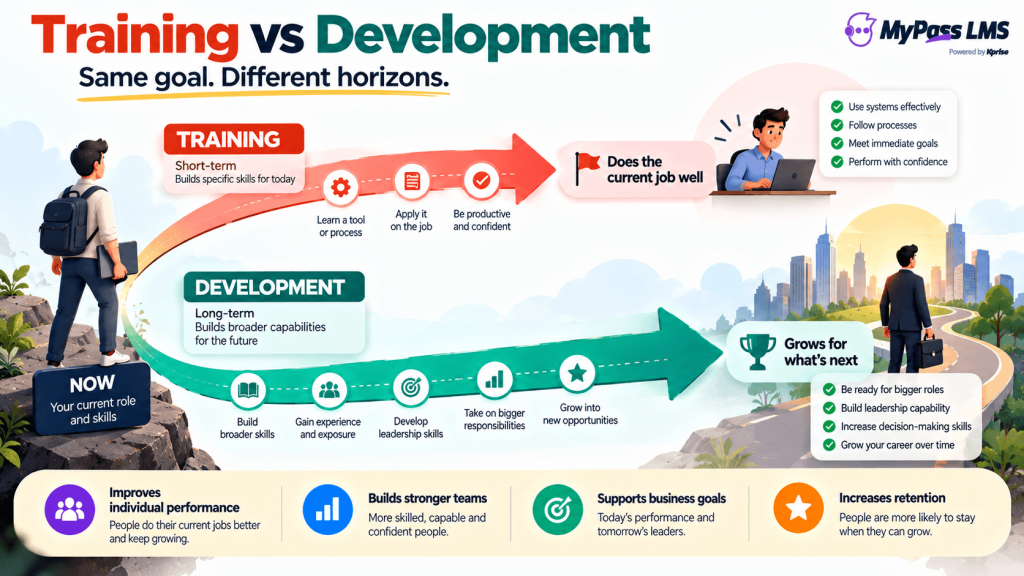
People say 'training and development' in one breath, as if it's a single thing. It's actually two related but distinct ideas, and understanding the difference is the whole point. Both are about improving employees' skills and abilities, but they aim at different horizons. Training is usually about now: teaching someone a specific skill or how to do a particular task they need for their current role. Development is about later: growing a person's broader capabilities and preparing them for the future.
A quick way to feel the difference: teaching a new hire to use your CRM is training, it's specific, immediate and tied to their current job. Helping that same person build the leadership skills to run a team one day is development, it's broader, longer-term and about who they're becoming. Most organisations need both, and lumping them together hides the fact that they serve different purposes and often call for different approaches.
| Training is about now, the specific skill someone needs for their current job. Development is about later, the broader growth that prepares them for the future. Same goal of improving people, different horizons. |
Training vs Development, Side by Side
Laying them next to each other makes the distinction clear, and shows why you need both.
- Training, focus: a specific skill or task. Development, focus: the whole person and their career.
- Training, horizon: short-term, immediate. Development, horizon: long-term, ongoing.
- Training, aim: do the current job well. Development, aim: grow into bigger roles and challenges.
- Training, example: learning a tool or process. Development, example: leadership, judgement, strategic thinking.
- Training, trigger: a clear skill gap now. Development, trigger: future potential and career growth.
The Main Methods
Training and development happen through a mix of methods, and good organisations use several, matched to what they're trying to achieve. The common ones include on the job training (learning by doing the real work), e-learning and online courses (scalable and consistent), instructor-led sessions and workshops (good for complex or interactive topics), coaching and mentoring (powerful for development and growth), and stretch assignments (real responsibility that develops people through experience).
No single method is best, the skill is matching the method to the goal. A specific procedure might suit a short e-learning module; building a future leader needs mentoring and real experience over time. The strongest programmes blend training methods for immediate skills with development methods for long-term growth, rather than defaulting to whatever's easiest to arrange.
Why It's a Business Investment, Not a Cost
It's tempting for leaders to see training and development as an expense to minimise. The organisations that do best treat it as an investment, because the returns are real. Training lifts performance and cuts mistakes now; development builds the leaders and capabilities the business will need next. Together they're also one of the strongest drivers of retention and engagement, people stay and give more where they're genuinely developed.
There's a cost to skipping it, too, it's just less visible: under-skilled staff, slow onboarding, no bench of future leaders, and people leaving for somewhere that invests in them. For most organisations, the question isn't whether to do training and development, but how to do it well, which increasingly means delivering and tracking it through an LMS so you can actually see what's working. If you're building a programme, you can try that in practice for free.
| Treat training and development as an investment, not a cost. The expense of doing it is visible; the far larger cost of not doing it, under-skilled staff, no future leaders, people leaving, just shows up more slowly. |
The bottom line
Training and development both improve employees' skills and abilities, but they aren't the same: training is short-term and focused on a specific skill someone needs now, while development is long-term and about growing the whole person and their career. You need both, delivered through a mix of methods, and the best organisations treat them as a core investment rather than a cost to cut.
How well you deliver and measure it is where tools help. See how MyPass LMS supports training and development in one place, explore it free, or read about creating an employee training programme to put it into practice.
Frequently asked questions
What is training and development?
Training and development is the process of improving employees' skills, knowledge and abilities. It has two related parts: training, which is usually short-term and focused on a specific skill or task someone needs for their current role, and development, which is longer-term and about growing a person's broader capabilities and career. Together they help employees perform well today and grow for the future, which is why organisations treat training and development as a core part of managing and investing in their people.
What is the difference between training and development?
Training is about the present, teaching a specific skill or task someone needs for their current job (like learning a tool or process), so it's short-term and immediate. Development is about the future, growing a person's broader capabilities and preparing them for bigger roles (like leadership or strategic thinking), so it's long-term and ongoing. Same underlying goal of improving people, but different horizons: training makes someone effective in their current role, development grows them into what's next.
What are the methods of training and development?
Common methods include on-the-job training (learning by doing the real work), e-learning and online courses (scalable and consistent), instructor-led sessions and workshops (good for complex topics), coaching and mentoring (powerful for longer-term development), and stretch assignments (growth through real responsibility). No single method is best, the skill is matching the method to the goal. Immediate, specific skills often suit training methods like e-learning, while long-term growth needs development methods like mentoring and real experience over time.
Why is training and development important?
Because it improves performance and reduces costly mistakes now, while building the leaders and capabilities a business will need next, and because it's one of the strongest drivers of retention and engagement. People tend to stay and contribute more where they're genuinely developed. There's also a hidden cost to skipping it: under-skilled staff, slow onboarding, no bench of future leaders, and people leaving for employers who invest in them. That's why strong organisations treat training and development as an investment rather than an expense to cut.