
Fire Safety Training Requirements: What Employers Need to Know
On this page 7 sections
Short answer
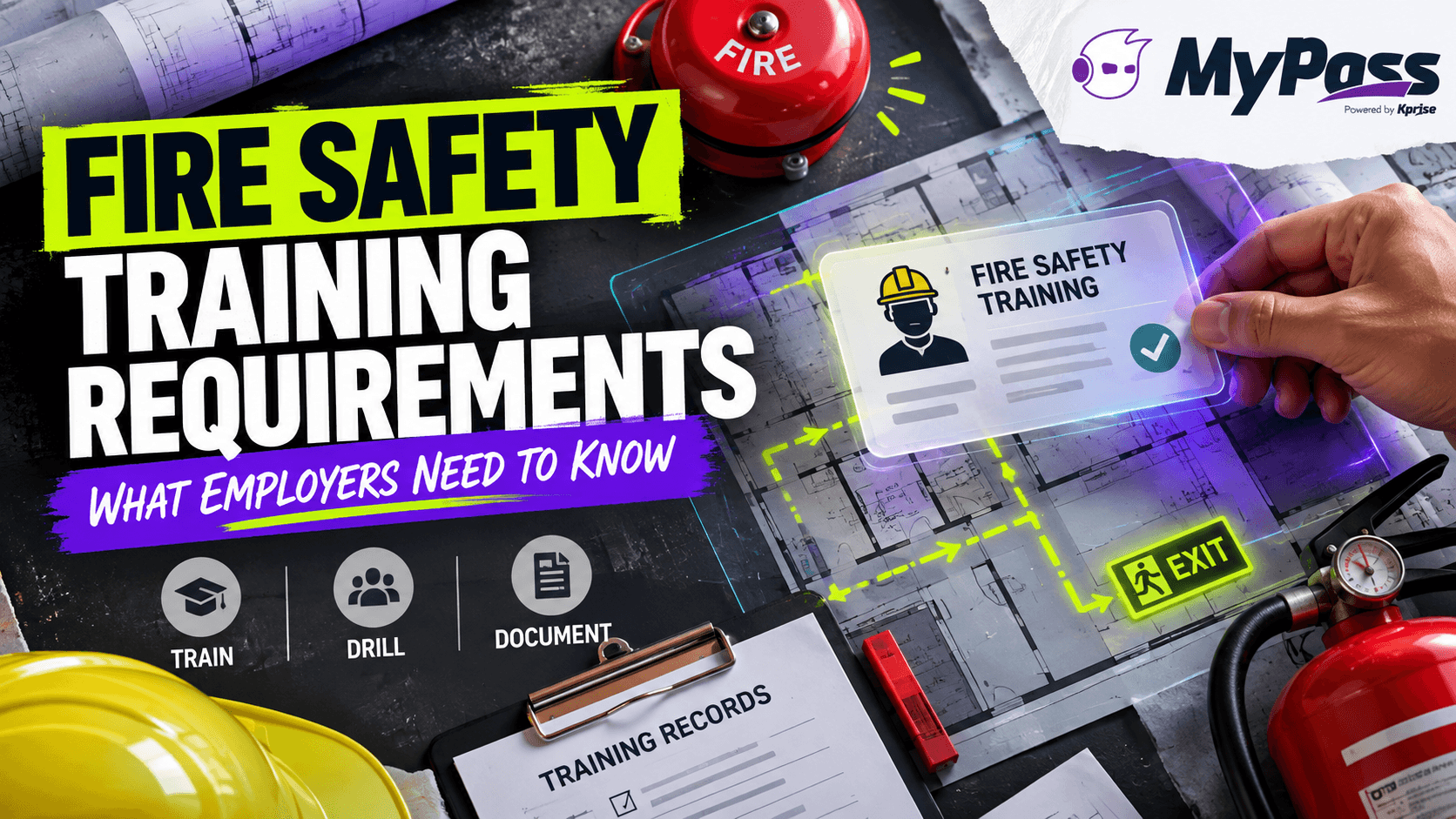
Employers are generally required to train employees on fire safety: how to prevent fires, what to do if one starts, and how to evacuate safely. Many rules require this training at hire and reviewed periodically (extinguisher-use training is often annual). Exact requirements depend on your location, workplace and the standards that apply, so confirm yours with the relevant authority.
Why Fire Safety Training Is Non-Negotiable
Fire safety is one of those things everyone agrees matters and plenty of workplaces still treat casually, until there's an incident and the questions start. Were people trained? Did they know the evacuation route? Was any of it documented? Fire safety training exists so that if the worst happens, your people know exactly what to do, and so that you can show you took your responsibility seriously.
In most places, this isn't optional. Employers generally have a legal duty to provide fire safety training, and failing to can mean fines, liability, and, far worse, people hurt because they didn't know how to get out. This article explains the common requirements in plain English, but fire safety rules vary by location and workplace, so treat it as a starting point, not the final word.
Key point
This is general information, not legal or safety-compliance advice. Fire safety requirements vary by country, state and type of workplace. Always confirm your specific obligations with the relevant authority and a qualified safety professional.
What Fire Safety Training Usually Covers
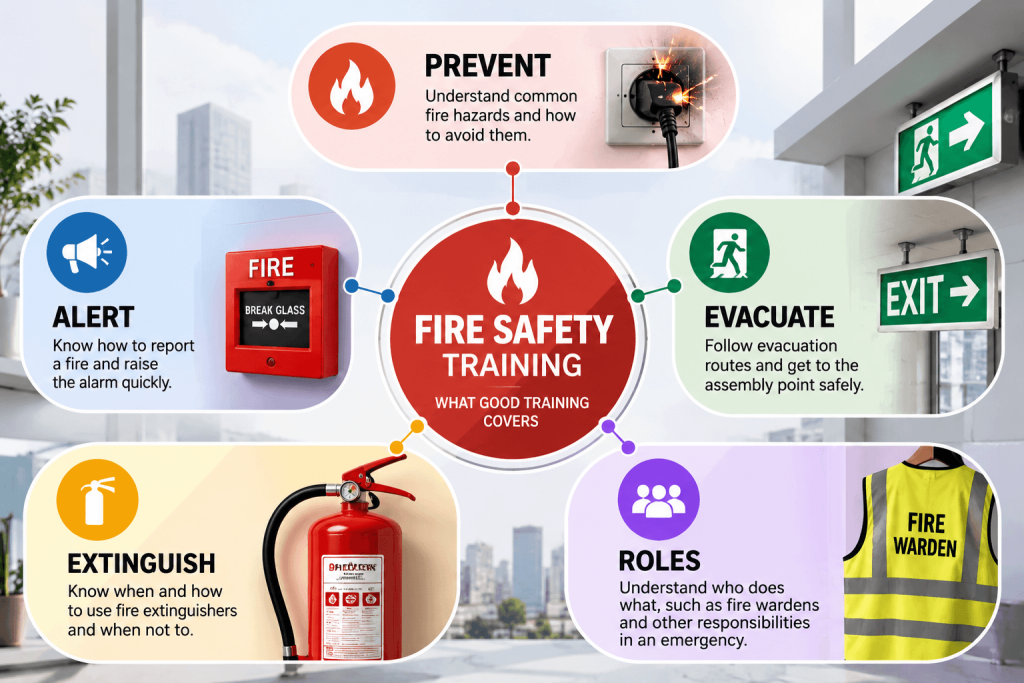
While the exact rules vary, fire safety training generally covers a consistent core, the things every employee needs to know to prevent fires and survive one. If you're building or reviewing your training, these are the usual components.
- Prevention: the common fire hazards in your workplace and how to avoid them.
- Raising the alarm: how to report a fire and alert others quickly.
- Evacuation: the routes, the assembly point, and how to get out safely.
- Extinguishers: when and how to use them, and crucially when not to.
- Roles: who does what, such as fire wardens, if your workplace designates them.
How Often Is It Required?
The most common question is frequency, and the honest answer is that it depends, but there are useful patterns. Fire safety training is generally required when someone is first hired, before they could be caught in an emergency unprepared, and again whenever something changes: a new workplace, new hazards, a change to the evacuation plan, or new responsibilities.
Beyond that, periodic refreshers are widely expected, and for some elements they're explicitly required, training on using fire extinguishers, for example, is commonly required annually. Evacuation drills are a related practice: many workplaces run them periodically so that evacuation is practised, not just explained. The safe approach is to treat fire safety as something you refresh on a regular cycle rather than train once and forget, and to confirm the specific frequencies that apply to you.
Key point
A useful rule of thumb: train at hire, retrain when anything changes, and refresh on a regular cycle (annually for extinguisher use is common). But confirm the exact frequencies for your workplace, because they vary, and 'we did it once' is rarely enough.
Documentation and Drills: The Part That Gets Missed
Two things trip employers up even when the training itself is fine. The first is documentation. As with any safety training, if you can't show who was trained, on what, and when, you may be treated as if the training never happened, which matters enormously after an incident or in an inspection. Keep clear, retrievable records for every employee.
The second is the gap between knowing and doing. People can be told the evacuation route and still freeze or go the wrong way under real stress, which is why evacuation drills matter: they turn knowledge into practised response. Running drills periodically, and recording that you did, both prepares people and demonstrates diligence. Training plus documentation plus practice is what genuinely reduces risk, not a one-off slideshow.
How MyPass LMS Helps You Stay on Top of It
The knowledge part of fire safety training, prevention, alarm, evacuation, extinguisher use, roles, sits naturally in an LMS, and that's where MyPass LMS helps. You deliver fire safety training to every employee, assign it automatically to new hires, and reassign refreshers on the right cycle so the annual or periodic requirements don't quietly lapse.
Completion is recorded against each person with dates and assessment results, so one-click reporting gives you the documentation an inspector or incident investigation asks for, instead of a frantic search through paper. You can confirm at a glance who's up to date and who isn't. Any hands-on element, like a physical extinguisher drill or an evacuation drill, still happens in person, but the knowledge training and the all-important records live in one place.
Key point
Set fire safety training to auto-assign to every new hire and to refresh on your required cycle, then let the platform track and chase it. That removes the most common failure, people quietly going untrained or overdue, without anyone having to remember.
The bottom line
Fire safety training isn't optional: employers generally must train employees to prevent fires, raise the alarm, evacuate safely and use extinguishers appropriately, usually at hire, whenever things change, and on a regular refresh cycle. Two things catch employers out, documenting the training and practising evacuation through drills, so make sure you do both.
Treat fire safety as an ongoing, tracked, practised responsibility, not a one-off. See how auto-assignment, refresher scheduling and audit-ready records work in MyPass LMS features, read about OSHA safety training requirements, or start a free trial. Always confirm your specific obligations with the relevant authority and a qualified professional.
Frequently asked questions
Is fire safety training required for employees?
In most places, yes. Employers generally have a legal duty to train employees on fire safety, how to prevent fires, raise the alarm, evacuate safely and, where relevant, use extinguishers, so that people know what to do in an emergency. Failing to provide it can mean fines, liability and, far worse, people hurt because they couldn't get out safely. The exact requirements vary by location and workplace, so confirm your specific obligations with the relevant authority.
How often is fire safety training required?
It depends on your location and workplace, but common patterns are: at hire (before someone could face an emergency unprepared), again whenever something changes (new site, new hazards, revised evacuation plan, new responsibilities), and on a periodic refresh cycle. Some elements have explicit frequencies, training on using fire extinguishers is commonly required annually, for example. The safe approach is to refresh regularly rather than train once, and to confirm the exact frequencies that apply to you.
What should fire safety training cover?
Generally a consistent core: fire prevention (the hazards in your workplace and how to avoid them), how to raise the alarm and alert others, evacuation (routes, assembly point, getting out safely), when and how to use fire extinguishers and when not to, and any designated roles such as fire wardens. The exact content varies by workplace and jurisdiction, but these components cover what employees need to know to prevent a fire and respond safely if one happens.
Do we need to document fire safety training and run drills?
Both are strongly advisable and often required. Documentation matters because if you can't show who was trained, on what and when, you may be treated as if the training never happened, which is critical after an incident or in an inspection, so keep clear records for every employee. Evacuation drills matter because people can know the route and still freeze under stress; practising turns knowledge into response. Training, documentation and practice together are what genuinely reduce risk.
Keep reading
Compliance training
OSHA Safety Training Requirements: What You Must Provide and How Often
Compliance training
Harassment Training Requirements by State: 2026 Guide

Choosing an LMS
LMS Requirements Checklist You Can Copy
Compliance training