Best LMS for Logistics and Transportation: A Buyer's Guide
On this page 6 sections
Short answer
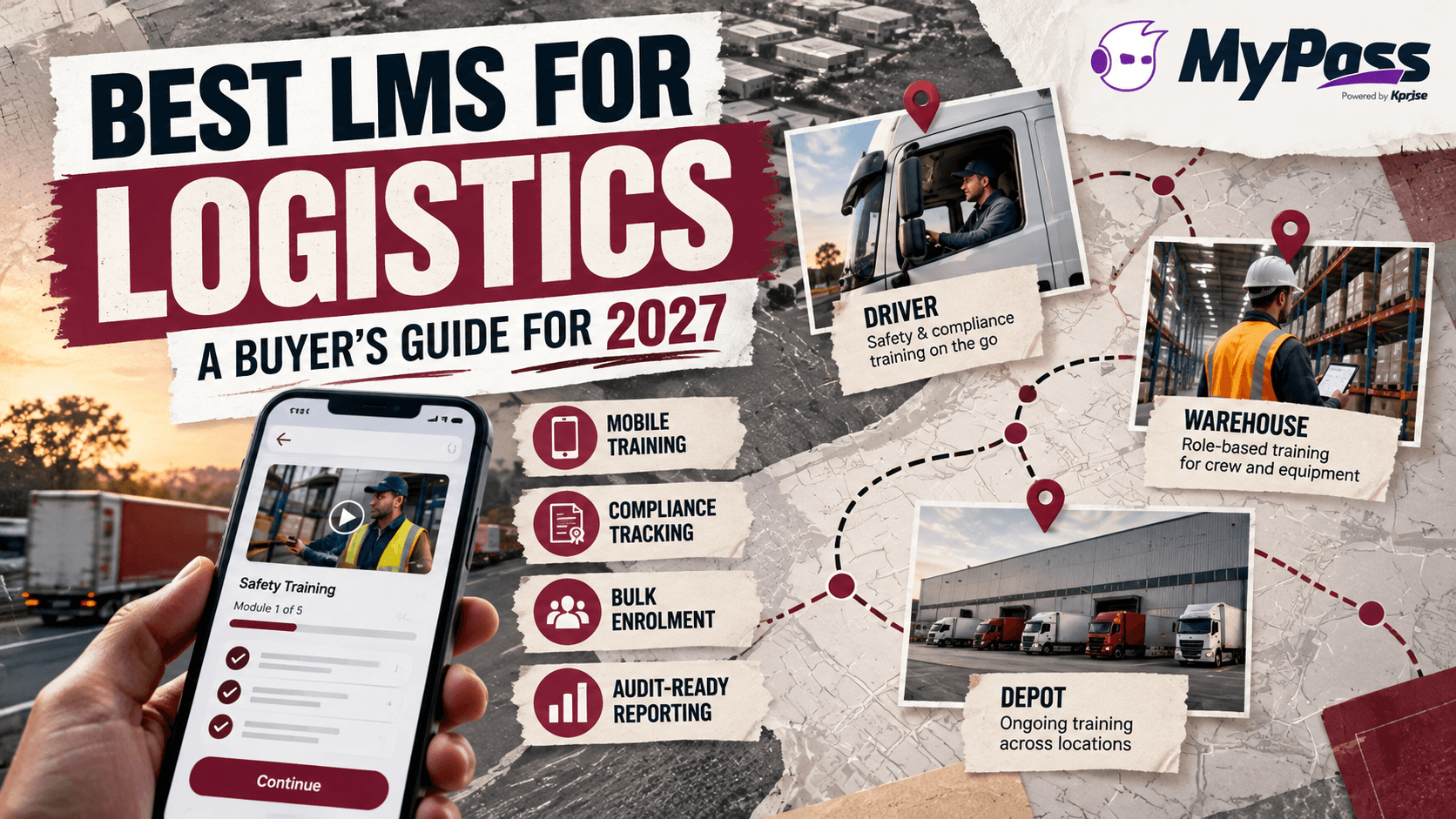
The best LMS for logistics handles a workforce that's rarely in one place: drivers, warehouse crews and field staff who need safety and regulatory training delivered to their phones. Look for mobile and offline access, certification and compliance tracking (for things like driver training rules), bulk enrolment, and reporting that proves training for audits.
What Makes This Industry Different
Logistics and transportation run on people who are constantly moving, drivers on the road, crews in warehouses and depots, staff spread across a network. Almost none of them sit at a desk, and a lot of them don't have reliable connectivity when they most need the training. On top of that, the sector is heavily regulated: driver training rules, safety requirements, and documentation that has to be produced on demand.
That makes logistics one of the harder sectors to train, and one where the wrong LMS is useless. A platform built for office workers at desks simply doesn't reach a driver in a cab or a picker on a warehouse floor. The right LMS for logistics is mobile, works around patchy signal, handles the compliance load, and proves it all when a regulator asks.
Key point
A driver can't stop and log into a desktop to do their training. If the LMS doesn't live comfortably on a phone, and ideally cope with low or no signal, it won't reach the people who most need it. Mobile is the entry requirement for logistics, not a nice-to-have.
What to Look for in an LMS
Generic 'best LMS' lists miss what actually matters for your sector. Here's what to weigh, based on the realities of the work, not a feature checklist.
- Mobile and offline-friendly access, for drivers and crews away from any desk.
- Compliance and certification tracking, including driver-training and safety requirements.
- Bulk enrolment and role-based assignment across a distributed workforce.
- Short modules workers can complete between runs or shifts.
- Audit-ready reporting, because regulators and auditors will ask for proof.
The Compliance Load Is Relentless
Logistics carries a heavy and continuous compliance burden. Depending on where and what you operate, there are driver-training requirements, safety training, equipment certifications and more, much of it with set frequencies and strict record-keeping. Miss a requirement or fail to document it, and you're exposed to fines, failed audits, or worse after an incident.
Managing that by hand across a scattered workforce is close to impossible. The right LMS assigns the required training by role, reassigns refreshers on the correct cycle, and keeps a complete record of who was trained on what and when, ready to produce the moment a regulator or auditor asks. For a logistics operation, that automated compliance trail is often the main reason to adopt an LMS at all. (Specific legal requirements vary by jurisdiction and operation; confirm yours with a qualified professional.)
Where MyPass LMS Fits
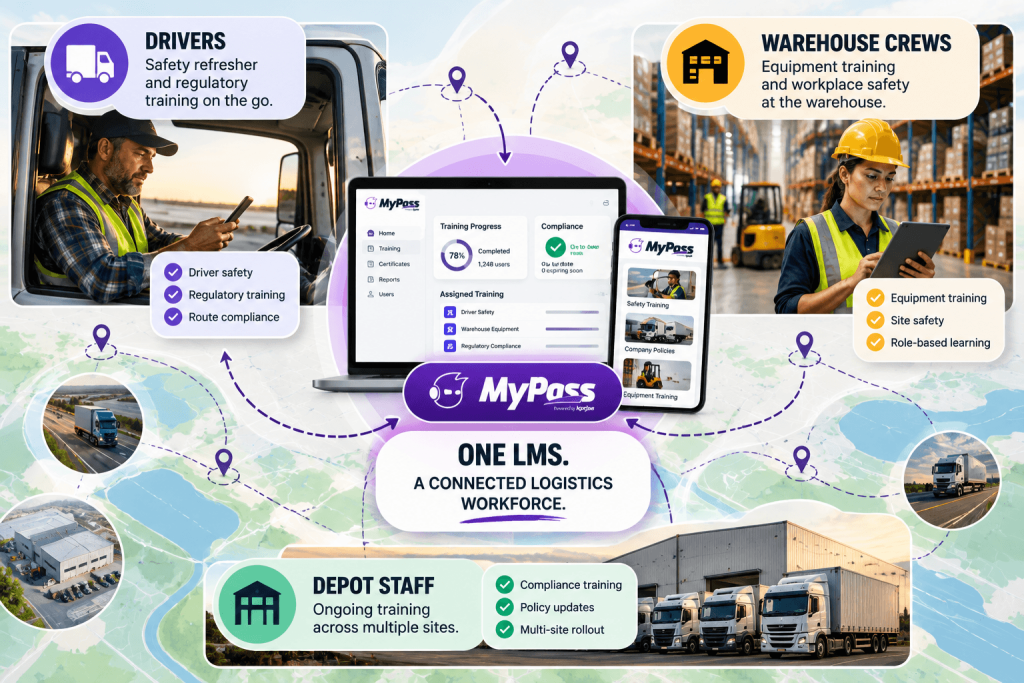
MyPass LMS suits a logistics workforce that's mobile and distributed. Training is mobile-first, so drivers and crews complete it on their phones wherever they are, and role-based assignment plus bulk enrolment get the right training to the right people across a scattered network without manual effort.
For the compliance load, recurring assignments reschedule required training on the right cycle so nothing lapses, and one-click reporting produces the complete who-was-trained-on-what-and-when record that regulators and auditors demand. Flat pricing with unlimited registered users means a large, fluctuating logistics headcount doesn't inflate your costs, you're not paying per driver or per picker.
Key point
Map your regulatory requirements first, what training is mandatory, for whom, and how often, then set those up as role-based recurring assignments. The platform then tracks and chases them, turning your biggest compliance risk into something that runs itself.
The bottom line
Logistics training has to reach people on the move and carry a heavy compliance load, so the best LMS for logistics is mobile-first, handles certification and regulatory tracking, and produces audit-ready records on demand. A platform designed for desk-bound office workers won't cut it for drivers, warehouse crews and field staff.
See how mobile delivery, compliance tracking and audit reporting work in MyPass LMS features, read about building a compliance training calendar, or start a free trial. This article is general guidance, not legal advice.
Frequently asked questions
What should I look for in an LMS for logistics and transportation?
Prioritise mobile and offline-friendly access (drivers and crews are rarely at a desk and signal can be patchy), compliance and certification tracking for driver-training and safety requirements, bulk enrolment and role-based assignment across a distributed workforce, short modules workers can do between runs or shifts, and audit-ready reporting. The core challenge is reaching mobile people and carrying a heavy compliance load, so fit with those realities matters more than a long feature list.
How do you train drivers and a distributed logistics workforce?
Deliver training to their phones, since they're on the road or spread across depots and warehouses, not at desks, and keep modules short so they fit between runs or shifts. Use role-based assignment so each person gets the training relevant to their job, bulk enrolment to handle volume, and tracking so you can confirm completion. For a workforce this scattered, mobile, self-paced delivery plus automated assignment is the only practical way to train everyone consistently.
How does an LMS help logistics companies with compliance?
It assigns required training (driver training, safety, equipment certifications) by role, reassigns refreshers on the correct cycle so nothing lapses, and keeps a complete record of who was trained on what and when, ready to produce when a regulator or auditor asks. Managing that heavy, continuous compliance load by hand across a scattered workforce is near impossible; an LMS automates the assignment, tracking and record-keeping, which is often the main reason logistics operations adopt one.
Can logistics training work offline or with poor signal?
It's an important consideration, because drivers and depot or warehouse crews often work where connectivity is poor. A good logistics LMS is mobile-first and copes with low-signal situations so training isn't blocked by a weak connection. When evaluating platforms, check how they handle intermittent connectivity, since a tool that needs constant strong wifi won't reliably reach a workforce that spends its day on the road or in large facilities with patchy coverage.
Keep reading
Choosing an LMS
Best LMS for Government and Public Sector Organizations

Choosing an LMS
Best LMS for Hospitality: Hotels, Restaurants and Beyond

Choosing an LMS
Best LMS for Construction: What to Look For in 2027
Choosing an LMS