| Manager training equips people who lead teams with the skills to coach, give feedback, and support others, skills that individual-contributor success never taught them. It matters because managers drive most of team engagement and retention. The best programs focus on practice, not theory: feedback, one-on-ones, delegation and difficult conversations. |
The Problem: Promoted, Then Abandoned
Most managers are promoted because they were excellent individual contributors. Then they are handed a team and left to figure out leadership on their own. The skills that made them a great analyst, engineer or salesperson, doing the work brilliantly, are not the skills that make a great manager, which are mostly about getting work done through other people.
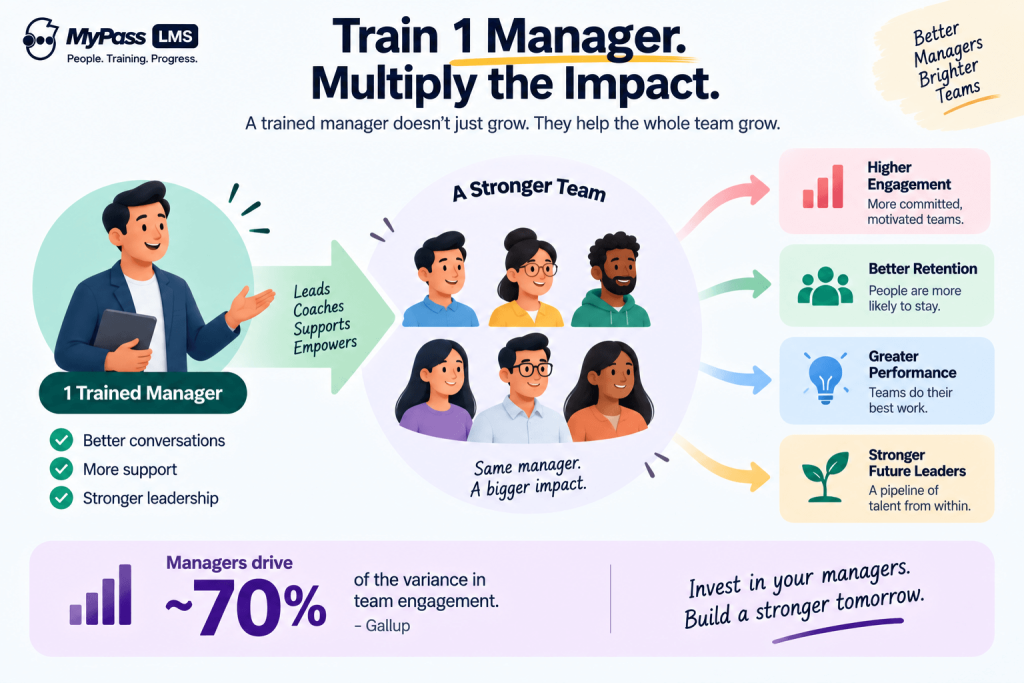
This gap is expensive. Managers account for the large majority of the variance in team engagement, and employees consistently cite poor management as a top reason for leaving. An untrained manager does not just underperform; they can drive an entire team out the door. Training managers is therefore one of the highest-leverage things an organization can do.
| The core insight: great individual performance and great management are different skill sets. Promoting your best performer without training them to lead is setting up both the manager and the team to struggle. |
Why Manager Training Pays Off
The return on manager training is unusually clear because managers act as a multiplier: their skills affect everyone who reports to them. Investing in one manager improves the experience of a whole team.
- Engagement: managers drive most of the variance in how engaged their teams are.
- Retention: organizations that prioritise manager development report notably lower turnover.
- Effectiveness: a large majority of managers report improved effectiveness after training.
- Consistency: trained managers apply feedback, recognition and support the same way across the organization.
The Skills a Manager Program Should Cover
Effective manager training focuses on the practical, interpersonal skills new leaders actually struggle with, not abstract leadership theory. A strong curriculum covers a recognisable core.
- Giving feedback: clear, timely, constructive feedback without avoidance or harshness.
- One-on-ones and coaching: running regular check-ins that develop people rather than just status-update.
- Delegation: shifting from doing the work to enabling the team to do it.
- Difficult conversations: handling performance issues and conflict directly and fairly.
- The mindset shift: moving from top performer to team enabler.
- Leading through change: guiding teams through new tools, priorities and ways of working.
| The single most requested and most avoided manager skill is giving feedback. If a program does only one thing well, it should teach managers to give clear, regular, constructive feedback. |
How to Build the Program
The strongest manager programs are built around practice and reinforcement, not one-off workshops. People do not become good managers by watching a video; they do it by trying a skill, getting feedback and trying again.
- Blend the formats: self-paced content for concepts, live or virtual sessions for practice and role-play.
- Build in practice: give managers a chance to rehearse feedback or a tough conversation before the real one.
- Reinforce over time: spread learning across weeks with follow-up, not a single day that fades.
- Support in the flow of work: short refreshers and job aids at the moment a manager needs them.
- Measure behaviour: track whether managers actually run one-on-ones and give feedback, not just course completion.
This blended, practice-first structure is exactly what a learning platform is for: hosting the self-paced content, scheduling the live practice sessions, and tracking who has completed and applied each part.
Running Manager Training in MyPass LMS
MyPass LMS supports manager development as an ongoing, blended program rather than a one-off event. Self-paced modules, instructor-led session management and learning paths combine so a manager can move through concept, live practice and reinforcement in one structured journey, with completion and progress tracked throughout.
Because it is one platform with unlimited registered users, you can roll manager training out across every people-leader without a per-seat cost, and the AI course builder helps you turn your own leadership frameworks and real scenarios into content quickly, so the training reflects how your organization actually works rather than generic theory.
| A practical tip: build your manager scenarios from real situations in your organization, redeployed conversations, common conflicts, your actual review process. Managers engage far more with training that mirrors their real world than with generic case studies. |
The bottom line
Manager training matters because managers are the single biggest influence on whether teams are engaged and stay. Yet most are promoted for individual performance and never taught to lead. The fix is a practice-first, blended program covering the real skills, feedback, coaching, delegation and difficult conversations, reinforced over time rather than crammed into a day.
Run it as an ongoing program and measure behaviour, not just completion. See how blended delivery, learning paths and the AI course builder support manager development in MyPass LMS features, or start a free trial.
Frequently asked questions
Why is manager training important?
Because managers have an outsized effect on their teams. They drive the large majority of the variance in team engagement, and poor management is a top reason employees quit. An untrained manager can drive a whole team out, while a well-trained one lifts engagement and retention across everyone who reports to them, making manager training one of the highest-leverage investments available.
What should a manager training program include?
Focus on the practical interpersonal skills new managers struggle with: giving clear feedback, running effective one-on-ones and coaching, delegating instead of doing, handling difficult conversations, the mindset shift from top performer to team enabler, and leading through change. Practical, practice-based content on these beats abstract leadership theory for building capable managers.
How do you train first-time managers?
Train them before or as they step up, not months later, and build the program around practice. Blend self-paced content for concepts with live or virtual sessions for role-play, give them safe opportunities to rehearse feedback and tough conversations, reinforce learning over weeks rather than a single day, and support them in the flow of work with short refreshers when they need them.
How do you measure the impact of manager training?
Measure behaviour and outcomes, not just completion. Track whether managers actually run regular one-on-ones and give feedback, then watch team-level engagement and retention over time. Because managers drive most of team engagement, improvements in their teams' engagement and turnover are the clearest signal that the training is working.