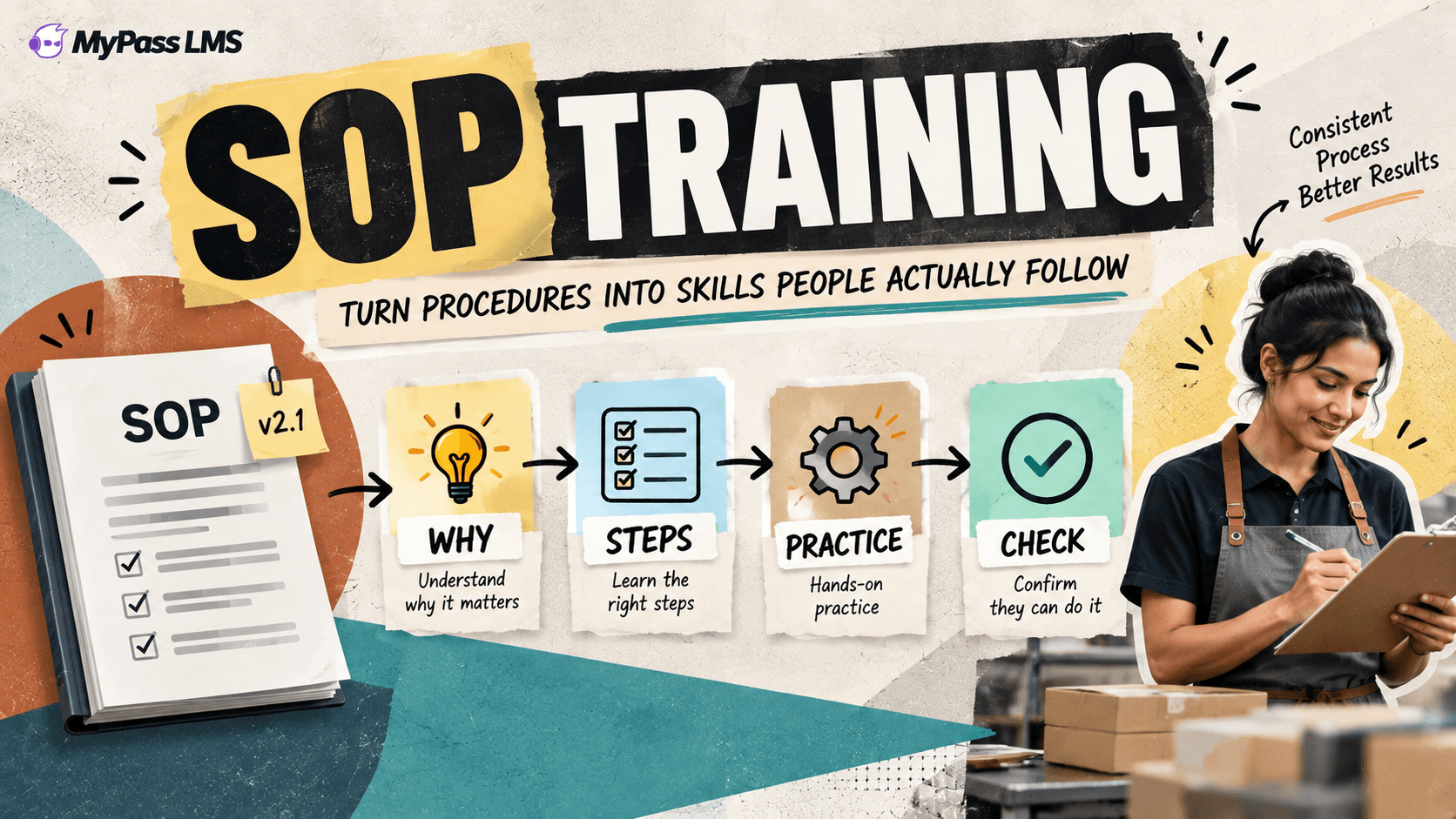
SOP Training: How to Get People to Actually Follow Procedures
On this page 7 sections
Short answer
SOP training turns a written procedure into something people can actually do consistently. It works when you start from a clear, correct SOP, turn the document into a short lesson (the why plus the steps), let people practice rather than just read, check they can follow it with a quick assessment, and update the training whenever the procedure changes.
Why Writing the SOP Isn't Enough
Plenty of teams pour effort into writing detailed standard operating procedures, save them to a shared drive, and then wonder why everyone still does the task their own way. The document exists, so surely people should follow it? But a procedure sitting in a folder changes nothing. People do what they were shown, what they're used to, or what seems fastest, not what a PDF they skimmed once says.
SOP training is the bridge between having a procedure and having people actually follow it. And it's worth getting right, because the whole reason SOPs exist, consistency, safety, quality, only shows up when people genuinely work to them. Writing the SOP is step one of many, not the finish line.
Key point
A shared drive full of perfect SOPs that nobody follows is just expensive documentation. The value isn't in the document existing, it's in people doing the task the way the document describes, and that takes training, not just writing.
Start by Checking the SOP Is Any Good
Before you train a single person, make sure the procedure itself is worth following. There's no point drilling people on a process that's unclear, out of date, or simply wrong, you'll just get consistent mistakes. A good SOP that's ready to train on is clear enough that someone unfamiliar could follow it, current with how the work is actually done now, and correct, ideally checked by someone who does the task well.
This step catches a common trap: SOPs that describe how things were done two years ago, or how a manager imagines they're done rather than reality. If the people who do the job every day read the SOP and wince, fix the SOP first. Training people on a bad procedure is worse than no training, because now the mistakes are official.
Turn the Document Into Actual Training
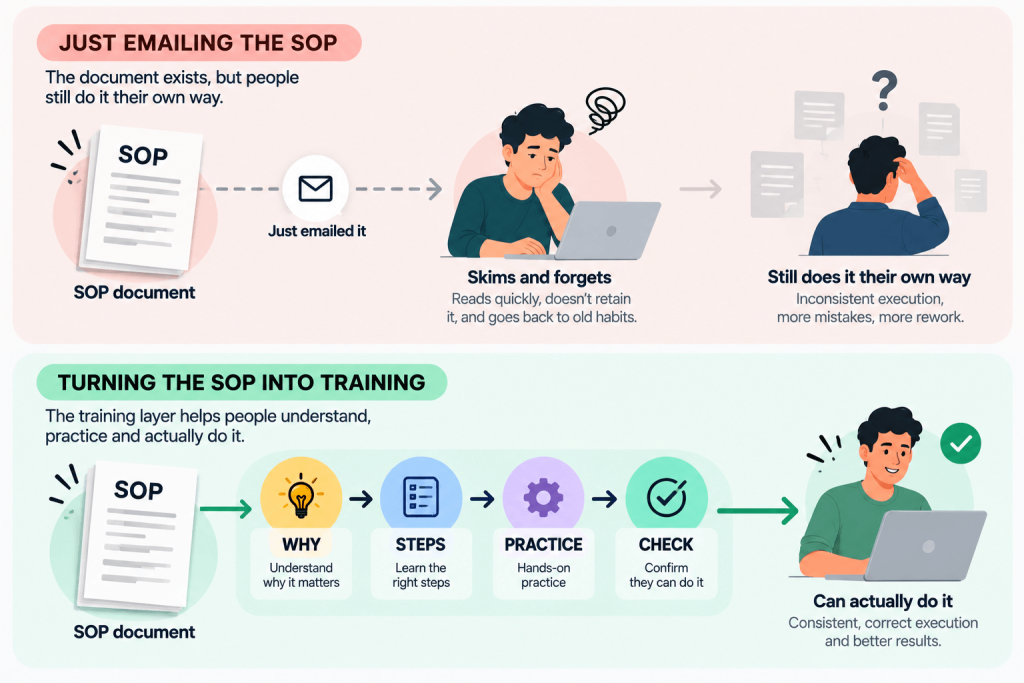
Emailing people the SOP and asking them to read it is not training, it's hoping. Real SOP training turns the document into something people engage with and remember. That means more than the steps.
- The why: a sentence or two on why the procedure matters, so it's not just arbitrary rules.
- The steps: broken down clearly, ideally with visuals or a short demo, not a wall of text.
- Practice: a chance to actually do it, on a real or simulated task.
- A check: a quick assessment or sign-off so you, and they, know they've got it.
Reading a Procedure Isn't Doing It
Here's the thing most SOP training gets wrong: it stops at reading. Someone reads the procedure, clicks "I understand," and is counted as trained. But reading how to do something and being able to do it under real conditions are completely different, ask anyone who's read a recipe and then produced a disaster in the kitchen.
That's why practice and a genuine check matter so much for SOPs specifically. These are procedures, things people do, not facts they recall. The training should give people a chance to actually run through the procedure, and then confirm they can, whether that's a short assessment, a supervised run-through, or a sign-off. "They opened the document" is not the same as "they can follow the process," and only one of those reduces your risk.
Key point
The completion metric that matters for an SOP isn't 'read the document,' it's 'demonstrated they can do it.' If your training can't tell the difference, it's measuring the wrong thing.
How MyPass LMS Keeps SOP Training Current
SOPs have a particular challenge: they change, and when they do, the training has to change with them, or people carry on doing the old version. In MyPass LMS you turn each SOP into a proper course, the why, the steps, a demo or visuals, and a check for understanding, so it's real training rather than a document you hope people read.
You can add assessments so completion means "can follow the procedure," not just "opened the file," and track who's actually been trained on the current version. When an SOP changes, you update the course and reassign it, so everyone is re-trained on the new version and your records show who's up to date, which matters a lot in regulated or safety-critical work. Because you can assign by role, people only get the procedures relevant to their job.
Key point
Pick the one procedure where inconsistency costs you most, safety, quality, or a costly rework, and build proper training for that SOP first. A single well-trained procedure shows the difference between documented and actually followed.
The bottom line
Writing an SOP is the easy part; getting people to follow it is the real work, and that takes training, not a shared drive. Start by making sure the procedure is clear, current and correct, turn the document into a short lesson with the why and the steps, let people practice instead of just reading, check they can actually do it, and update the training whenever the SOP changes.
Consistency, safety and quality only show up when people genuinely work to the procedure. See how turning SOPs into tracked, assessable courses works in MyPass LMS features, or read about built-in course authoring. Want to try it on your own procedures? Start a free trial.
Frequently asked questions
How do you train employees on SOPs?
First make sure the SOP itself is clear, current and correct, you can't train people well on a bad procedure. Then turn the document into a short lesson that covers why the procedure matters and walks through the steps (ideally with visuals or a demo), give people a chance to practice it on a real or simulated task, and check they can actually follow it with a quick assessment or sign-off. Finally, update the training and re-train whenever the SOP changes.
Why don't employees follow SOPs?
Usually because the SOP was written and filed but never trained, so people do what they were shown, what they're used to, or what seems fastest, not what a document they skimmed once says. Sometimes the SOP itself is unclear, out of date or wrong, so following it feels pointless. The fix is to make the procedure genuinely good, then turn it into real training with practice and a check, rather than assuming a document on a drive changes behaviour.
Is reading an SOP the same as being trained on it?
No, and treating it that way is a common mistake. Reading how to do something and being able to do it under real conditions are different, like reading a recipe versus cooking the dish. SOPs are procedures people perform, not facts they recall, so training should include a chance to practice and a genuine check that they can follow it. 'Opened the document' doesn't reduce your risk; 'demonstrated they can do it' does.
How do you keep SOP training up to date?
Treat the training and the procedure as linked: whenever the SOP changes, update the course and reassign it so everyone is re-trained on the current version, and keep records of who's been trained on which version. This matters especially in regulated or safety-critical work, where people following an outdated procedure is a real risk. An LMS makes this manageable by letting you update a course once and push the new version to everyone who needs it, with tracking.
Keep reading
Compliance training
AML Training for Employees: A Plain-English Guide
Compliance training
Fire Safety Training Requirements: What Employers Need to Know
Compliance training
Why Employees Ignore Compliance Training, and How to Fix It
Compliance training