| An open-source LMS is a learning platform whose source code is freely available to use, modify and self-host, with no license fee. Moodle is the best-known example. You gain full control and no per-user cost, but take on hosting, maintenance and technical work. Open-core is a related model with a free core plus optional paid support. |
What Open-Source Means for an LMS
An open-source LMS is a learning management system whose source code is publicly available and free to use, modify and host yourself. There is no license fee and no vendor controlling access to the code. Moodle is the best-known example, powering a large share of the world's e-learning, but it is far from the only one.
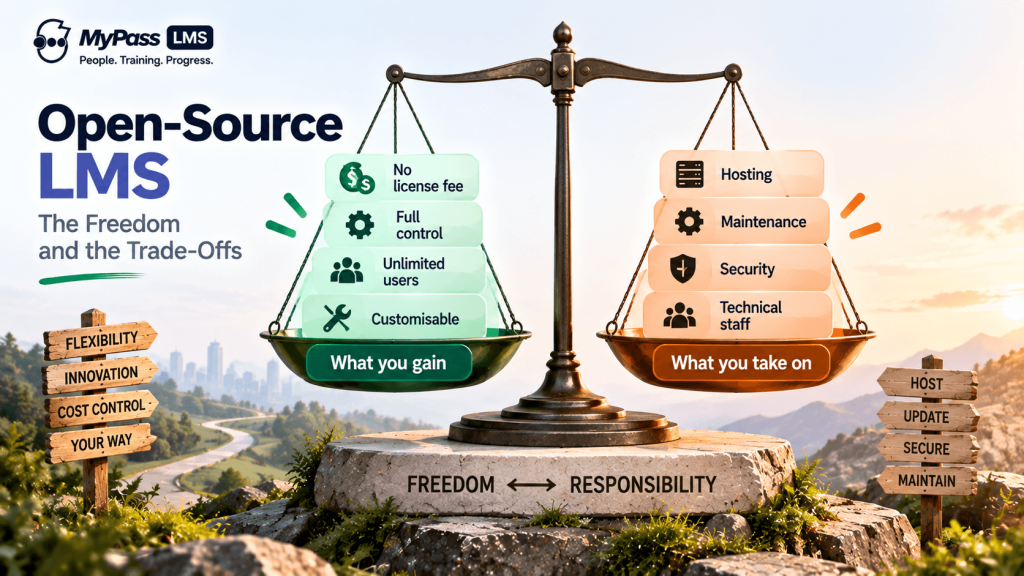
The defining trait is control. Because you have the code, you can change anything, host it wherever you want, and never pay per user. That freedom is the whole appeal. The trade-off is that everything a vendor would normally handle, hosting, updates, security, support, becomes your responsibility, which is a real cost in money and staff time even though the software itself is free.
| Open-source LMS software is free as in freedom, not always free as in effort. You pay no license fee, but you take on the hosting, maintenance and technical work a paid vendor would otherwise do for you. |
Examples of Open-Source LMS Platforms
Several established open-source platforms exist, each with different strengths. Knowing the main ones helps you judge whether open-source fits your needs.
| Platform | Known for |
| Moodle | The most widely used; huge plugin ecosystem, deep features |
| Open edX | Built for massive scale, the technology behind large MOOCs |
| Canvas LMS | Open-source core with a modern interface, popular in education |
| Chamilo | Lighter and simpler to self-host than Moodle |
These are genuinely free to download and run. The differences between them are mostly about scale, complexity and how much effort each takes to host and maintain.
The Trade-Offs
Open-source LMS software is powerful but not free of cost, and the trade-offs are worth understanding before you commit.
- Freedom: full control over the code, hosting and customisation, with no per-user fee.
- Cost of ownership: hosting, updates, security patches and backups all fall on you.
- Technical requirement: you need staff who can install, run and maintain the platform.
- Support: community forums exist, but there is no vendor guaranteeing help when something breaks.
- Customisation depth: you can change anything, if you have the skills to do it.
Open-Source vs Open-Core
A related model often confused with open-source is open-core. The difference matters when you weigh free options. A pure open-source LMS is entirely free with no paid edition behind it; you are on your own for hosting and support. An open-core LMS offers a free, self-hostable core edition backed by an optional paid managed version and support.
Open-core aims to keep the freedom and zero license cost of open-source while offering a clean path to managed hosting when you no longer want to run the server yourself. It suits organizations that like the idea of starting free and self-hosted but want the option of professional support and hosting as they grow, without changing platforms.
| If you want a free, self-hostable start but also want the option of managed hosting later without replatforming, open-core gives you that. Pure open-source gives you total freedom but no commercial safety net if you outgrow what you can self-manage. |
Where MyPass LMS Fits
MyPass LMS is open-core. MyPass Community Edition is a free, self-hosted edition with unlimited registered users and core learning features, giving you the zero-license-cost, self-hosted start of open-source. You handle hosting and maintenance, the honest trade-off of any self-hosted platform.
The difference from pure open-source is the upgrade path: if and when you would rather not run your own server, moving to managed hosting is a data migration on the same platform, with compliance, AMS integration, ecommerce and support available. That gives you open-source freedom now and a professional route up later, without rebuilding on a different product.
The bottom line
An open-source LMS gives you free, modifiable code you host yourself, with full control and no per-user fee, in exchange for taking on hosting, maintenance and technical work. Moodle is the best-known example. It is powerful and genuinely free of license cost, but not free of effort, so it suits teams with lasting technical capacity.
If you want the free, self-hosted start of open-source with a clean path to managed hosting, the open-core model fits. See open-core vs open-source, explore Moodle alternatives, or download the Community Edition.
Frequently asked questions
What is an open-source LMS?
An open-source LMS is a learning management system whose source code is freely available to use, modify and self-host, with no license fee. You gain full control and no per-user cost, but take on hosting, maintenance, security and support yourself. Moodle is the best-known example. It is free of license fee but not free of the effort and staff time to run it.
What are examples of open-source LMS platforms?
The best-known is Moodle, which powers a large share of global e-learning with a huge plugin ecosystem. Others include Open edX, built for massive scale and behind large MOOCs; Canvas LMS, which has an open-source core and a modern interface popular in education; and Chamilo, a lighter option simpler to self-host than Moodle. All are free to download and run yourself.
What is the difference between open-source and open-core?
A pure open-source LMS is entirely free with no paid edition behind it; you handle hosting and support alone. An open-core LMS offers a free, self-hostable core edition backed by an optional paid managed version and support. Open-core keeps the freedom and zero license cost of open-source while adding a clean upgrade path to managed hosting when you no longer want to self-host.
Is an open-source LMS really free?
It is free of license fee, but not free of cost. You pay nothing for the software, but hosting, updates, security patches, backups and support all fall on you, requiring staff time and technical capacity. The total cost of ownership can be significant. Open-source suits organizations with lasting technical resources; those without may find managed options cheaper once staff time is counted.