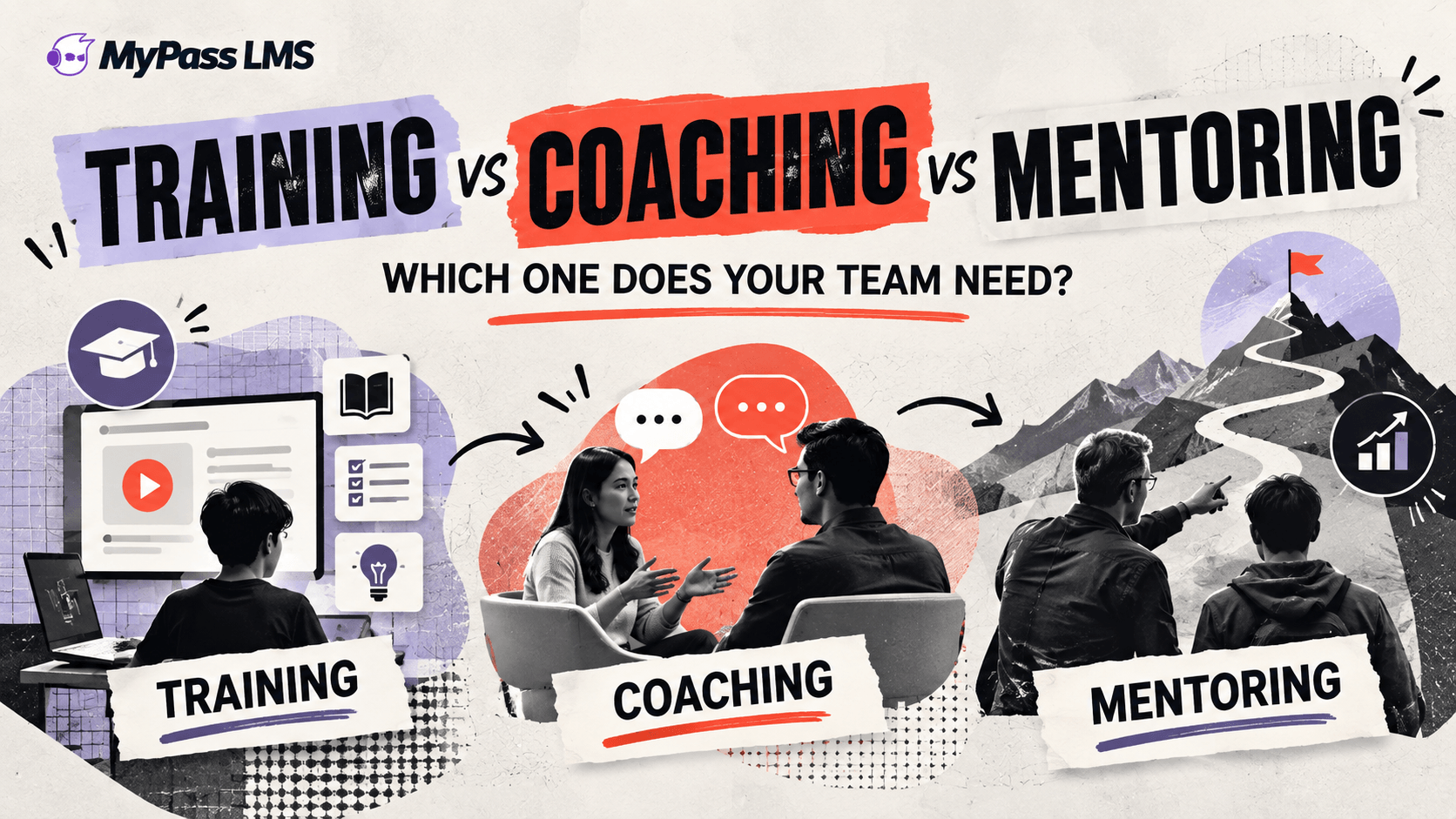
Training vs Coaching vs Mentoring: Which One Does Your Team Need?
Training vs coaching vs mentoring: what each one is, when to use it, who delivers it and how to measure it, with a quick guide to picking the right one.
On this page 7 sections
Training teaches a specific skill or knowledge to a group, usually in a structured, one-to-many way. Coaching is a focused, often short-term partnership that helps someone improve their own performance. Mentoring is a longer relationship where an experienced person guides someone's broader growth. They're not competing, most development uses all three, matched to what the person actually needs.
Three Words People Use Interchangeably (But Shouldn't)
"We need to train them." "They could use some coaching." "Let's set up a mentor." People reach for these three words as if they mean roughly the same thing, some form of "help this person get better." They don't, and using the wrong one wastes time and money. You can't fix a skill gap with mentoring, and you can't build a long-term career relationship with a two-hour course.
The difference is genuinely useful once it clicks, because it tells you which approach fits the situation in front of you. Here's the plain-English version, without the jargon, and a simple way to decide which one you actually need.
Key point
Reaching for the wrong one is a common and expensive mistake. Sending someone to a course when what they need is a mentor, or assigning a mentor when they just need to learn a specific skill, means the real need goes unmet while you spend the effort anyway.
The Plain-English Difference
Strip away the jargon and the three are easy to tell apart by what they're for and how they work.
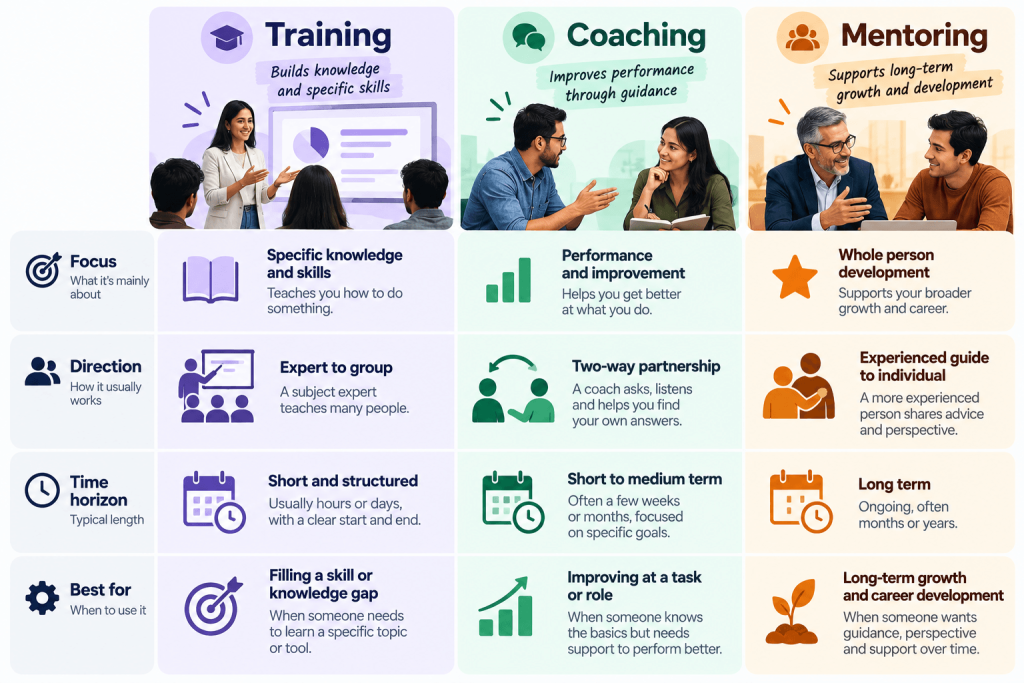
- Training: teaches specific skills or knowledge, usually structured and one-to-many. "Here's how to do X."
- Coaching: a focused, often shorter-term partnership to improve the person's own performance. "Let's work on how you're doing X."
- Mentoring: a longer relationship where an experienced person guides broader growth. "Let me help you grow over time."
The quick way to remember it: training is about knowledge, coaching is about performance, and mentoring is about the person's longer-term development. Training fills a gap in what someone knows or can do; coaching helps them get better at something, often by drawing answers out of them rather than telling; mentoring is a wiser, more experienced person investing in someone's path over months or years.
When to Use Which
The decision gets simple once you ask what the person actually needs right now. Match the approach to the need, not to whatever's easiest to arrange.
- Use training when there's a clear skill or knowledge gap: they don't know how to do something yet.
- Use coaching when they know the basics but need to improve their performance or work through a specific challenge.
- Use mentoring when the goal is longer-term growth, direction, judgment and navigating a career, not a single skill.
A quick example. A new hire who can't use your CRM needs training, teach them the system. Six months in, if they know the CRM but their deals keep stalling, that's coaching, work on how they're selling. And if they're wondering how to grow into a leadership role over the next few years, that's mentoring. Same person, three different needs at three different times.
Why the Best Answer Is Usually All Three
Here's the part the "vs" framing hides: these aren't competing options where you pick one and reject the others. The strongest development blends all three, because people have all three kinds of need, sometimes at once. Someone can be trained on a new tool, coached on applying it well, and mentored on where their career is heading, and each supports the others.
In fact, they work best together. Training gives people the knowledge; coaching helps them turn that knowledge into performance; mentoring keeps them growing and motivated over the long haul. Treating them as a toolkit rather than a either/or choice is what separates development that ticks a box from development that actually grows people. The question isn't "which one," it's "what does this person need, and in what mix."
Key point
Think of it as a toolkit, not a menu you pick one item from. The real skill is reading what someone needs, often a bit of each, rather than defaulting to whichever approach your organization happens to be set up for.
Where an LMS Fits In
Of the three, training is the one you can systematize and scale, and that's where an LMS earns its place. You can't automate a mentoring relationship or replace a good coach with software, nor should you try. But the training layer, the structured, teachable knowledge and skills, is exactly what a platform handles well, and getting that layer solid frees your people up for the coaching and mentoring that only humans can do.
In MyPass LMS you deliver the training part consistently and at scale, so everyone gets the same solid foundation, and you can see who's completed what. That means your managers and mentors aren't spending their limited time teaching basics that a course could cover, they're spending it on the coaching and guidance that genuinely need a person. The platform handles the knowledge; your people handle the judgment.
Key point
Let the LMS carry the training so your humans can coach and mentor. The worst use of a senior person's time is explaining something a well-built course could teach, that time is far better spent on the performance and growth work software can't touch.
The bottom line
Training, coaching and mentoring aren't three words for the same thing, and knowing the difference saves you from spending effort on the wrong fix. Training teaches knowledge and skills, coaching improves performance, mentoring guides long-term growth. Match the approach to what the person actually needs right now, and remember they're a toolkit, not an either/or, most real development uses all three.
Systematize the training part so your people are free for the coaching and mentoring only they can do. See how MyPass LMS delivers the training layer at scale in MyPass LMS features, or read about building a leadership development program. Want to see it in action? Start a free trial.
Frequently asked questions
What is the difference between training, coaching and mentoring?
Training teaches specific skills or knowledge, usually in a structured, one-to-many way ("here's how to do X"). Coaching is a focused, often shorter-term partnership that helps someone improve their own performance, frequently by drawing answers out of them. Mentoring is a longer relationship where an experienced person guides someone's broader growth and career over time. In short: training is about knowledge, coaching about performance, and mentoring about the whole person's development.
When should you use coaching instead of training?
Use training when there's a clear knowledge or skill gap, the person doesn't yet know how to do something. Use coaching when they already have the basics but need to improve their performance or work through a specific challenge. For example, teaching someone your CRM is training; helping them figure out why their deals keep stalling once they know the CRM is coaching. If the answer is "they don't know how," train; if it's "they know how but aren't getting results," coach.
Can you use training, coaching and mentoring together?
Yes, and the strongest development usually does. They're not competing options, they're a toolkit, because people often have all three kinds of need at once. Someone can be trained on a new tool, coached on applying it well, and mentored on their longer-term career direction, and each reinforces the others. Training gives the knowledge, coaching turns it into performance, and mentoring keeps people growing. The real question is what mix a person needs, not which single one to pick.
Can an LMS replace coaching or mentoring?
No, and it shouldn't try. Coaching and mentoring depend on a human relationship, reading a person, drawing out their thinking, guiding their growth, which software can't replicate. What an LMS does well is the training layer: delivering structured knowledge and skills consistently and at scale, and tracking who's learned what. Getting that layer solid actually frees your managers and mentors from teaching basics, so they can spend their limited time on the coaching and mentoring that genuinely need a person.
Keep reading
Choosing an LMS
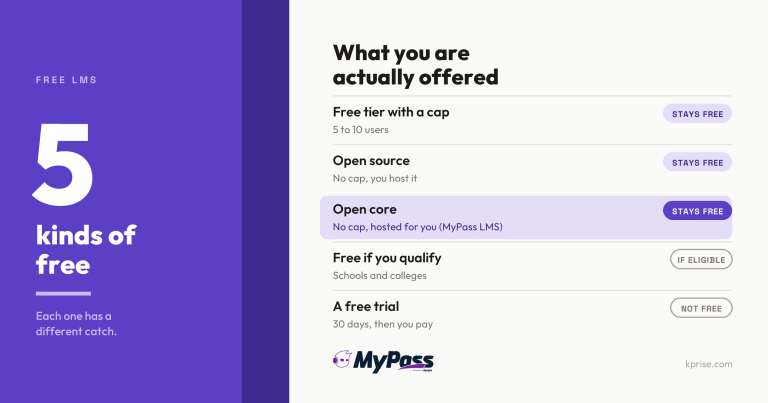
Free LMS or Free Trial? The Five Kinds of Free
Choosing an LMS
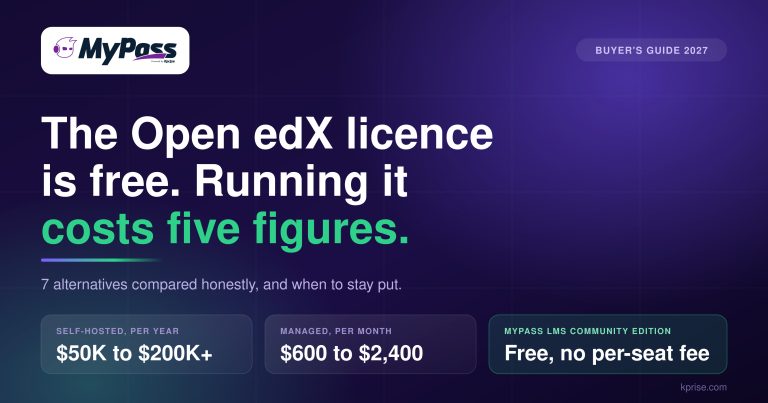
Open edX Alternatives: 7 Options Worth Comparing
Choosing an LMS
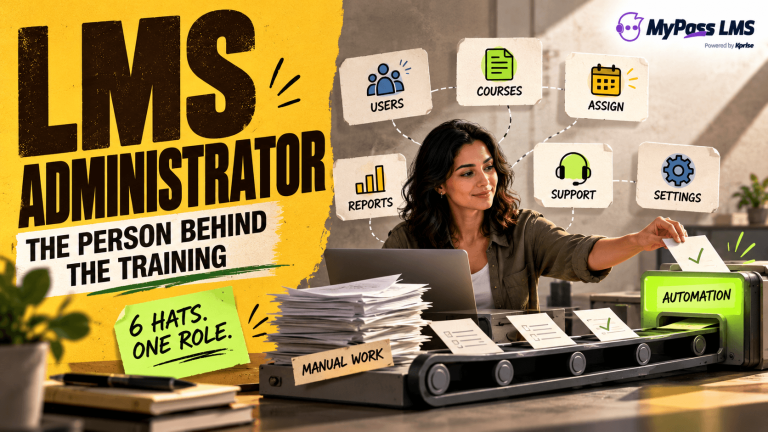
What Is an LMS Administrator? The Role, Explained

Choosing an LMS