AI Exam Proctoring in MyPass LMS: Three Tiers Explained
On this page 7 sections
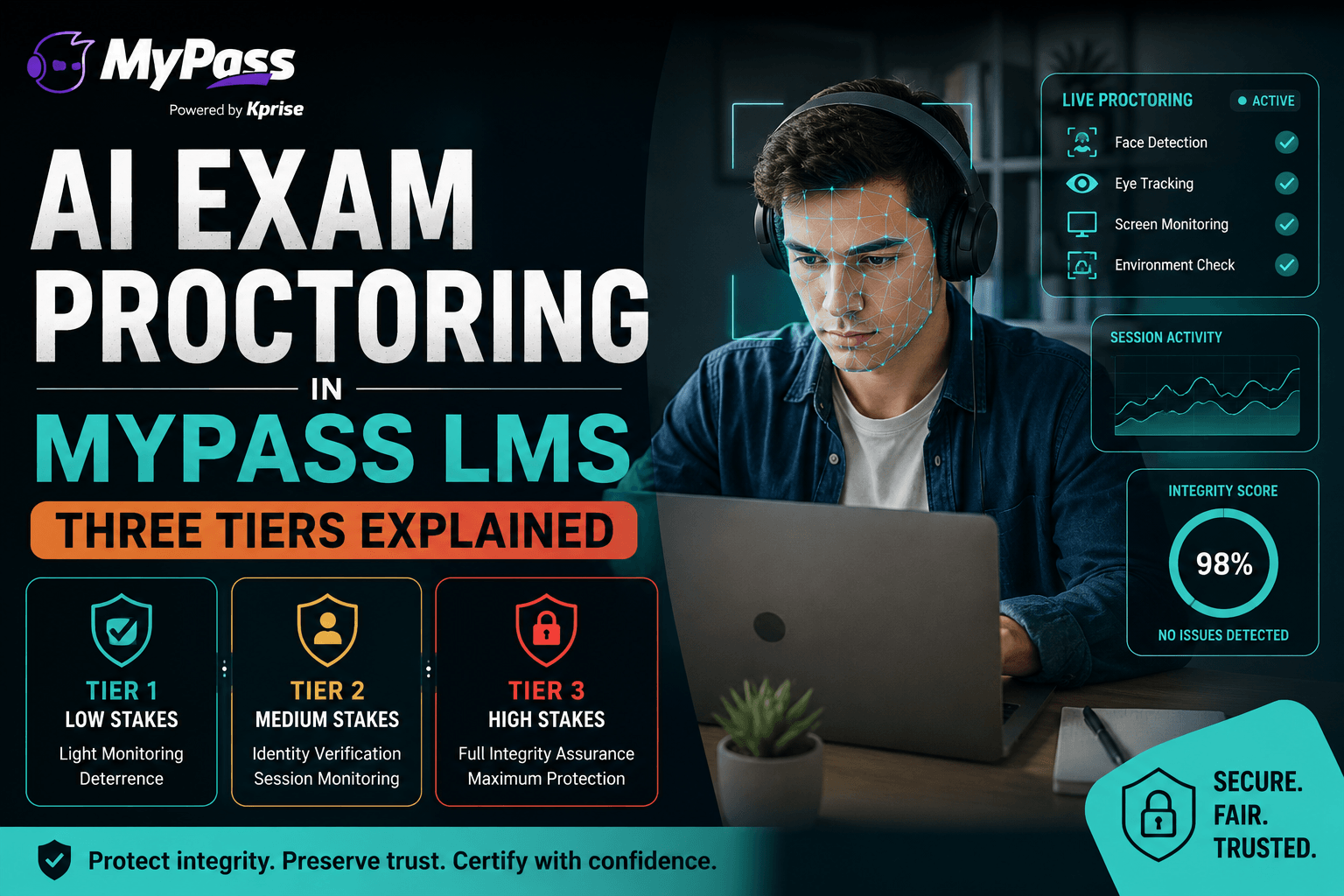
MyPass LMS offers AI exam proctoring across three tiers, so the level of monitoring can match the stakes of the exam. Lighter tiers suit internal assessments where deterrence is enough, while higher tiers suit credentialing exams where a certificate carries professional weight. Choosing a tier is a trade between integrity assurance, learner friction and cost.
Proctoring is a trade-off, not a feature to max out
Every proctoring decision balances three things: how much you need to trust the result, how much friction you are willing to impose on the candidate, and what you are prepared to spend. Maximum monitoring on a low-stakes quiz irritates people for no benefit. Minimal monitoring on a credentialing exam undermines the credential itself.
That is why MyPass LMS offers proctoring in three tiers rather than one setting. The question is not whether to proctor, it is how much proctoring this particular exam actually warrants.
How to think about the three tiers
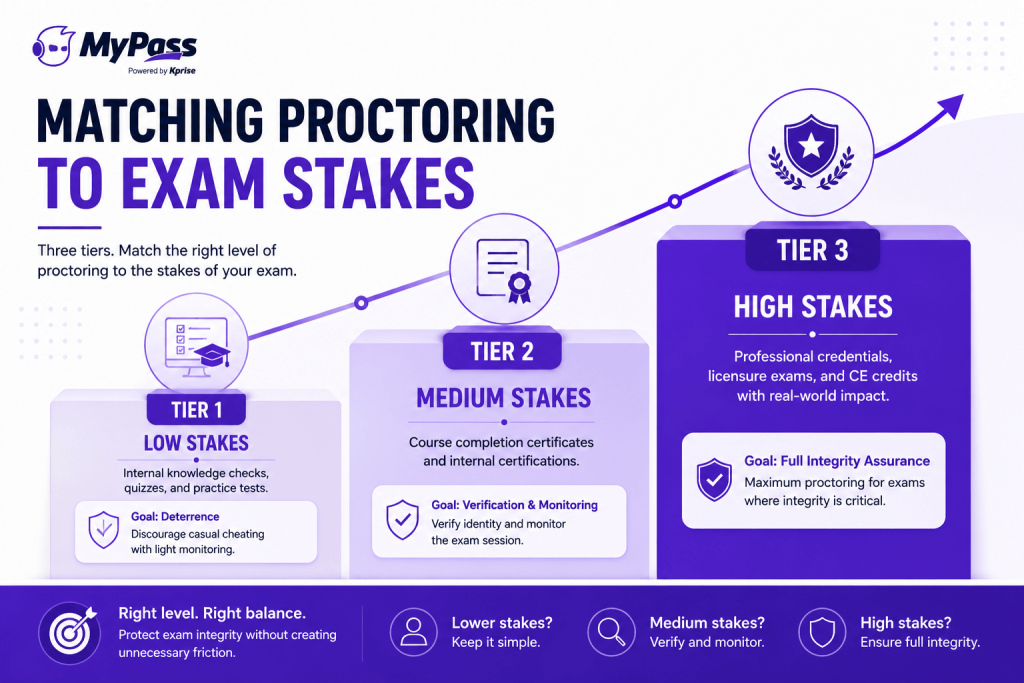
- Lower tier, for low-stakes assessment. Internal knowledge checks and course quizzes, where the goal is discouraging casual cheating rather than defending a credential. Minimal friction, quick to sit.
- Middle tier, for medium-stakes assessment. Course completion certificates and internal certifications, where identity verification and session monitoring give you reasonable confidence without a heavyweight process.
- Higher tier, for high-stakes assessment. Professional credentials, continuing education credits, and any exam where the certificate carries weight outside your organization and a compromised result would damage the credential's reputation.
Key point
→ A simple way to choose: ask what happens if someone cheats and passes. If the answer is 'they miss out on learning', use a lower tier. If the answer is 'an unqualified person holds a credential others rely on', use the highest tier.
What AI proctoring can and cannot do
Worth being straightforward here, because proctoring is often oversold.
What it does well: it deters opportunistic cheating simply by being present, it flags anomalies for human review, it verifies that the person who registered is the person sitting the exam, and it produces a record you can point to when a result is questioned.
What it does not do: replace human judgment. AI proctoring surfaces flags; a person still decides what those flags mean. A candidate looking away repeatedly might be cheating or might be thinking. Any organization treating an automated flag as a verdict rather than a prompt for review will eventually accuse an innocent candidate, which is a worse outcome than the cheating it was trying to prevent.
- Treat flags as a review queue, not a decision.
- Publish your proctoring rules to candidates before the exam so expectations are clear.
- Keep a human in the loop for anything that affects whether someone passes.
- Consider accessibility, since some candidates behave in ways an automated system may flag for reasons entirely unrelated to integrity.
Why proctoring inside the LMS matters
Many organizations bolt a third-party proctoring service onto their LMS. That works, but it introduces a seam: the exam lives in one system, the proctoring evidence in another, and the certificate in a third. When a result is challenged months later, someone has to reassemble the story across all three.
In MyPass LMS, proctoring sits inside the same platform as the assessment engine, the certification records and the learner's history. The exam, the proctoring session and the credential issued from it are one connected record. For a certification body defending the integrity of its credential, that connection is the point.
Choosing the right tier for your programme
- Map each exam you run to its actual stakes rather than applying one setting everywhere.
- Reserve the highest tier for exams whose certificates are relied on by third parties such as employers, regulators or the public.
- Use lighter tiers for formative assessment, where friction costs you completion and buys you little.
- Review after a cycle. If flags are almost never meaningful at a given tier, you are probably over-proctoring that exam.
The bottom line
AI exam proctoring works best when the level of monitoring matches the stakes of the exam, which is why MyPass LMS offers three tiers rather than a single setting. Use lighter monitoring for internal knowledge checks, and reserve the highest tier for credentials that carry weight beyond your organization. Keep a human in the loop for any flag that affects a result, and keep the exam, the proctoring evidence and the credential in one system so the record holds together when it is questioned.
See the full assessment and certification toolkit, explore AI capabilities in MyPass LMS, or start a free trial.
Frequently Asked Questions
What is AI exam proctoring?
AI exam proctoring uses automated monitoring during an online exam to verify the candidate's identity and flag anomalies for human review. It deters opportunistic cheating and produces a record supporting the validity of a result.
How many proctoring tiers does MyPass LMS offer?
Three. The tiers let you match monitoring to the stakes of each exam, from light monitoring for internal knowledge checks up to full integrity assurance for professional credentialing exams.
Which proctoring tier should I use?
Match it to consequence. If cheating means a learner misses out on learning, use a lower tier. If it means an unqualified person holds a credential that employers, regulators or the public rely on, use the highest tier.
Can AI proctoring decide whether someone cheated?
It should not. AI proctoring surfaces flags for human review rather than delivering verdicts. Behaviour that looks anomalous can have innocent explanations, so a person should decide what any flag means before it affects a result.
Is proctoring built into MyPass LMS or a separate service?
It is built into the platform, so the exam, the proctoring session and the resulting certification live in one connected record rather than being split across an LMS, a third-party proctoring tool and a separate credentialing system.
Keep reading
Associations & CE
Member Management and Membership Tiers in an Association LMS
AI in learning
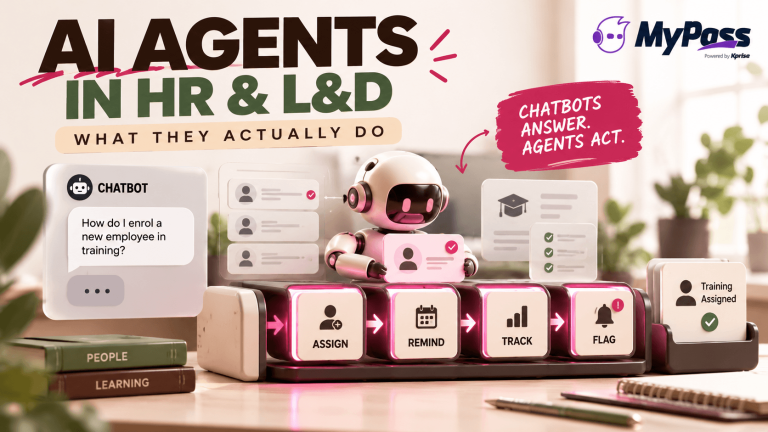
AI Agents in HR and L&D: A Plain-English Guide
AI in learning
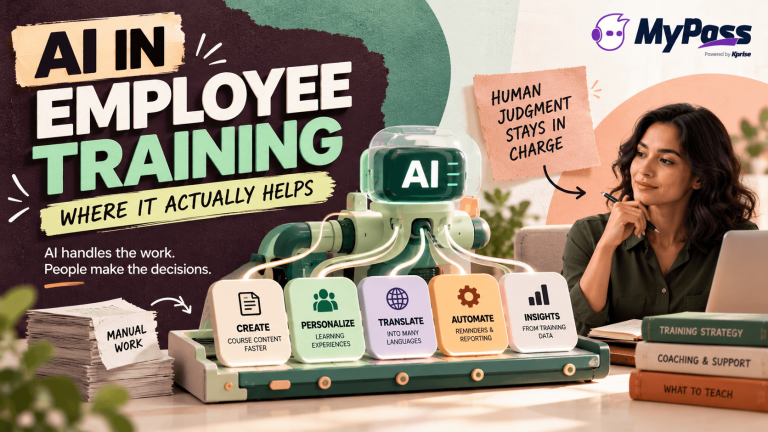
AI in Employee Training: Where It Actually Helps
AI in learning